
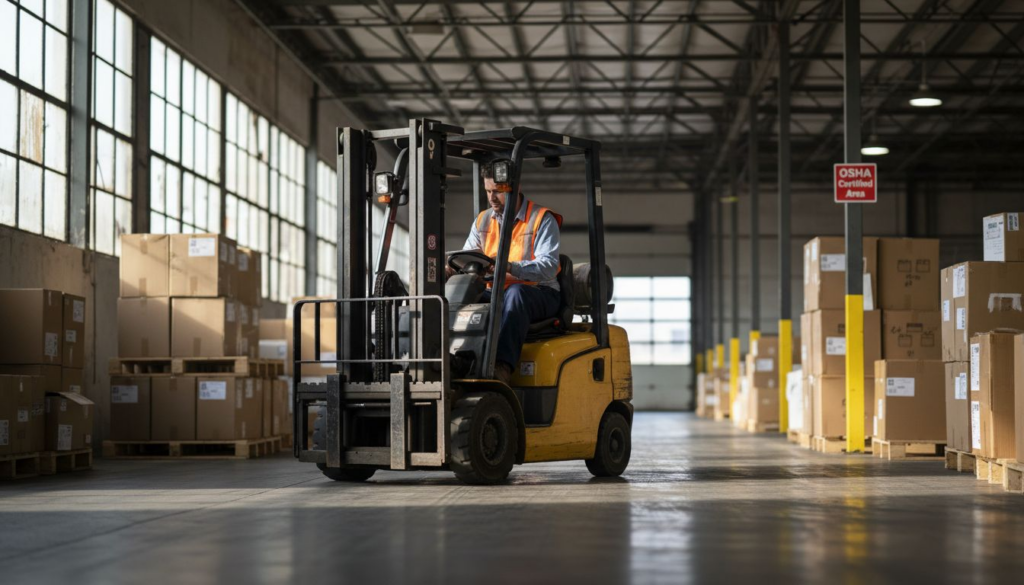

Operating a forklift without the right training can put your team and your company at risk of serious accidents, steep fines, and costly mistakes. Every warehouse manager knows that one wrong move can lead to injuries, damaged goods, and complex legal problems. The good news is, investing in OSHA forklift certification and proper training changes the game for safety, compliance, and overall efficiency.
This list breaks down the specific advantages of having a fully trained forklift team. You’ll discover how each benefit directly impacts your daily operations, protects your staff, and even strengthens your company’s reputation. Get ready to learn actionable reasons to prioritize professional forklift training—and see exactly how these steps lead to a safer and more productive workplace.
| Takeaway | Explanation |
|---|---|
| 1. Prioritize Proper Forklift Training | Comprehensive training significantly reduces workplace accidents, enhancing safety for employees and maintaining operational efficiency. |
| 2. Ensure OSHA Compliance to Avoid Fines | Meeting OSHA guidelines mitigates financial penalties and legal liabilities while demonstrating a commitment to safety. |
| 3. Boost Employee Confidence and Productivity | Trained operators operate with confidence, leading to faster task completion and improved efficiency in warehouse operations. |
| 4. Reduce Costs Associated with Accidents | Investing in training helps prevent costly accidents, protecting company resources and minimizing operational disruptions. |
| 5. Regularly Update Skills and Best Practices | Continuous learning ensures operators stay current with technology and safety standards, maintaining competitive advantage. |
Forklift accidents can transform a routine workday into a life-altering disaster. Proper OSHA forklift training is the critical shield that protects warehouse employees from potential injuries and catastrophic incidents.
Workplace safety isn’t just a regulatory checkbox – it’s a fundamental commitment to protecting human lives. Forklift hazard awareness training dramatically reduces accident risks by teaching operators how to:
Statistics reveal that comprehensive safety training can reduce workplace accidents by up to 70%. Trained operators become hyper-aware of their surroundings protecting not just themselves but their entire team.
Proper forklift training transforms operators from potential liability to workplace safety champions.
These safety benefits extend beyond immediate accident prevention. When employees feel confident in their training and equipment knowledge they work more efficiently and with greater peace of mind. This psychological safety translates into improved productivity and reduced workplace stress.
Pro tip: Conduct monthly safety refresher sessions to reinforce training and keep safety protocols top of mind for all warehouse personnel.
Navigating the complex landscape of workplace safety regulations can be challenging for warehouse managers. OSHA compliance isn’t just a legal requirement – it’s a critical strategy for protecting your business from potentially devastating financial penalties.
Forklift operators must meet stringent OSHA compliance guidelines that go far beyond basic training. These regulations mandate comprehensive safety protocols designed to minimize workplace accidents and protect employee wellbeing.
The financial implications of non-compliance are substantial:
Certification requirements include detailed documentation proving that each forklift operator has:
OSHA compliance is not an expense – it’s an investment in workplace safety and operational excellence.
By proactively implementing robust training programs warehouses can transform regulatory requirements from a burden into a strategic advantage that protects both employees and the company’s bottom line.
Pro tip: Maintain meticulous training records and schedule regular compliance audits to stay ahead of OSHA requirements and prevent potential violations.
Confidence is the invisible engine that drives workplace performance. Forklift training transforms uncertain operators into skilled professionals who approach their work with precision and self-assurance.
When employees understand equipment limitations thoroughly they become more than just workers – they become workplace safety champions. This comprehensive understanding leads to significant performance improvements across multiple dimensions.
Key productivity benefits include:
The psychological impact of proper training cannot be overstated. Competent operators feel empowered to make smart decisions quickly and confidently. They understand not just how to operate machinery but why specific safety protocols matter.
Confidence isn’t about eliminating fear – it’s about understanding your equipment and your capabilities.
Numerous studies demonstrate that well-trained forklift operators complete tasks 20-35% more efficiently than untrained counterparts. This translates directly into measurable productivity gains for warehouses willing to invest in comprehensive training programs.
Pro tip: Create a mentorship program where experienced certified operators can share knowledge and techniques with newer team members to continuously build workplace confidence.
Every warehouse accident represents more than just a momentary disruption – it’s a potential financial catastrophe. Preventative training transforms potential risks into manageable operational procedures.
Companies can prevent expensive operational disruptions by investing in comprehensive forklift training that addresses potential hazards before they become costly incidents.
Typical accident-related costs include:
Comprehensive training programs teach operators critical skills like:
One preventable accident can cost more than years of training investment.
Statistics reveal that well-trained forklift operators reduce workplace accidents by up to 70%. This translates into substantial savings for warehouses willing to prioritize employee education and safety protocols.
Pro tip: Implement a regular equipment inspection and reporting system where operators document potential risks during each shift to proactively prevent accidents.
Efficient warehouse operations are the heartbeat of successful logistics. Well-trained forklift operators transform workplace productivity from good to exceptional.
By understanding equipment capabilities, staff can dramatically improve operational workflows and minimize unnecessary downtime.
Key efficiency improvements include:
Operational performance metrics demonstrate that trained operators can:
Efficiency is not about working harder – it’s about working smarter with the right skills and knowledge.
Training creates a ripple effect of productivity. When employees understand their equipment thoroughly they can anticipate challenges proactively and make intelligent operational decisions that benefit the entire warehouse ecosystem.
Pro tip: Implement quarterly skills refresher courses to ensure your forklift operators continue to develop advanced operational techniques and maintain peak performance.
In the competitive world of warehouse logistics reputation is everything. Corporate safety standards speak volumes about a company’s professionalism and commitment to excellence.
Carefully implemented forklift training programs demonstrate to clients partners and industry peers that your organization prioritizes employee safety and operational excellence.
Key reputation enhancement strategies include:
Professional credibility factors that improve include:
A strong safety reputation is a powerful competitive differentiator in modern logistics.
Companies that invest in comprehensive training signal to the market that they are serious about quality performance and employee development. This commitment transcends basic compliance and positions your organization as a forward-thinking industry leader.
Pro tip: Regularly document and showcase your safety training achievements through case studies and performance metrics to continuously reinforce your company’s professional reputation.
In the rapidly evolving world of warehouse logistics technology and safety standards are constantly changing. Continuous learning becomes a strategic advantage for organizations committed to operational excellence.
OSHA training requirements mandate regular skill updates to ensure operators remain current with the latest safety protocols and technological innovations.
Key skill development areas include:
Professional development benefits encompass:
Knowledge is a warehouse’s most valuable inventory – continuously refresh and update it.
Modern forklift training programs are not static documents but dynamic learning experiences that evolve with industry standards. They transform operators from mere equipment users to sophisticated workplace safety professionals.
Pro tip: Schedule quarterly technical reviews and training updates to ensure your team remains at the forefront of industry best practices and technological advancements.
Below is a comprehensive table summarizing key aspects of forklift training discussed within the article.
| Aspect | Description | Benefits |
|---|---|---|
| Workplace Safety | Proper OSHA forklift training minimizes accidents and promotes situational awareness. | Enhanced employee protection and reduced incident risk. |
| OSHA Compliance | Adhering to OSHA standards prevents legal issues and fines. | Financial stability and avoidance of penalties. |
| Employee Confidence | Training fosters operator skill and self-assurance. | Improved task efficiency and workplace morale. |
| Accident Prevention | Predictive training reduces operational disruptions and costs. | Savings on damages and streamlined processes. |
| Operational Efficiency | Knowledgeable staff optimize material handling and operations. | Faster workflows and space utilization. |
| Company Reputation | Commitment to training demonstrates safety prioritization. | Increased client trust and industry leadership. |
| Skills Development | Continuous learning ensures cutting-edge capabilities. | Alignment with technological advancements and regulations. |
The article highlights critical challenges warehouses face such as preventing costly accidents, ensuring OSHA compliance, and boosting operator confidence to improve productivity. If you want to transform these challenges into opportunities, Forkliftacademy.com offers comprehensive and OSHA-compliant forklift training solutions designed exactly for these needs. By focusing on key benefits like improved workplace safety, up-to-date skills, and operational efficiency, our programs help warehouses protect employees and reduce costly downtime.
Explore our range of training options, from convenient online courses to hands-on onsite sessions, backed by over 20 years of industry experience. Visit Forklift Safety Archives and Forklift License Archives for resources to reinforce your workforce’s skills. Don’t wait to empower your team with the knowledge that saves lives and boosts productivity—start your OSHA forklift training journey now at Forkliftacademy.com.
The main benefits of OSHA forklift training include improved workplace safety, increased employee confidence and productivity, reduced accident risks, and enhanced compliance with safety regulations. To maximize these advantages, consider implementing a comprehensive training program that covers both theoretical and practical aspects within the first few months of employment.
OSHA forklift training enhances workplace safety by teaching operators to recognize hazards, understand proper equipment handling, and maintain situational awareness. To further improve safety, conduct regular refresher sessions to reinforce training protocols and keep safety top of mind for your team.
OSHA compliance for forklift operators involves completing formal training, demonstrating practical skills, and passing evaluations. Ensure your operators receive their certification and keep training records updated to avoid potential fines and legal issues.
Forklift training reduces the risk of expensive accidents by equipping operators with critical skills such as load balancing, spatial awareness, and emergency response procedures. Implement a robust training program, and you could see a reduction in workplace accidents by up to 70%, resulting in significant cost savings.
Forklift training significantly boosts employee productivity by reducing operational errors and enhancing task completion efficiency. Invest in comprehensive training programs, and you might see operators completing tasks 25-40% faster than their untrained counterparts.
Forklift training should be updated regularly, ideally every three years as per OSHA requirements, with additional quarterly refreshers to keep skills current. Schedule periodic training updates to ensure your team is knowledgeable about the latest safety protocols and technological advancements.