 Skip to content
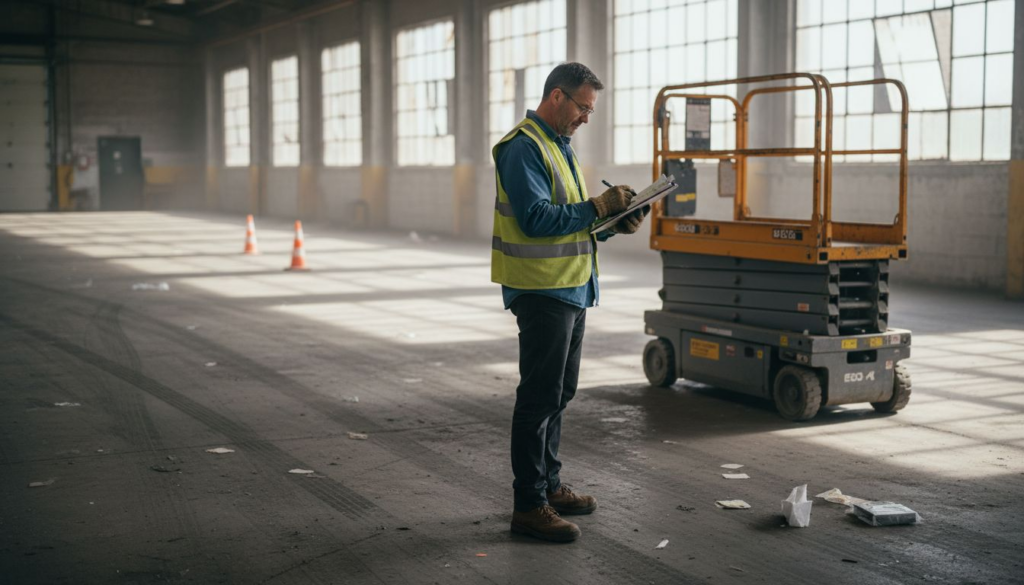

Warehouse floors can turn risky fast when basic scissor lift safety steps are skipped. For American logistics sites, choosing the right lift and training every operator not only prevents severe injuries but keeps operations compliant and reliable. This guide walks through OSHA-compliant beginner training steps that help managers and safety officers identify hazards, inspect equipment, and check operator skills so every lift operation starts safely and stays efficient.
| Key Message | Explanation |
|---|---|
| 1. Assess workplace hazards first | Evaluate potential risks like wind, terrain, and overhead obstacles to ensure safety. |
| 2. Conduct thorough equipment inspections | Daily checks on tires, hydraulic systems, and safety devices are essential for preventing accidents. |
| 3. Understand operator controls | Familiarize with all safety features and control functions to ensure safe lift operation. |
| 4. Follow safe operation procedures | Adhere to protocols like using personal protective equipment and managing platform height. |
| 5. Verify operator competence | Regularly assess operator skills and maintain updated training records to ensure safety compliance. |
Assessing potential workplace hazards and determining scissor lift suitability are critical first steps in ensuring safe aerial work platform operations. This process requires a comprehensive evaluation of your specific work environment to prevent potential accidents and equipment failures.
Begin by thoroughly examining your work site for potential risks. Scissor lift stability criteria demand careful consideration of multiple factors that could compromise safety. Key hazard assessment elements include:
Carefully inspect the ground where you plan to operate the scissor lift. The surface must be completely level and firm, with no significant slopes or uneven areas that could destabilize the equipment. Pay special attention to potential obstacles, ground composition, and surrounding workspace dimensions.
Here’s a summary of factors affecting scissor lift suitability:
| Hazard Type | Impact on Lift Operation | Recommended Mitigation |
|---|---|---|
| Wind over 28 mph | Causes instability and tipping | Delay operation until safe |
| Uneven terrain | Reduces platform stability | Use ground leveling techniques |
| Overhead obstacles | Risk of collision or electrocution | Plan workspace clearance |
| Overloading platform | Equipment malfunction possible | Strict weight monitoring |
| Poor weight distribution | Uneven lift function | Proper load placement |
Workplace safety begins with meticulous hazard assessment and understanding your equipment’s precise operational limitations.
Evaluate the specific scissor lift model’s technical specifications against your workplace requirements. Verify that the lift’s height capacity, load limits, and platform dimensions precisely match your intended tasks. Different scissor lifts are designed for varying work environments, so matching the equipment to your specific needs is crucial for preventing potential accidents.
Pro tip: Always conduct a comprehensive site survey and equipment assessment before initiating any aerial work platform operation, documenting potential hazards and mitigation strategies.
Before operating a scissor lift, conducting a thorough safety inspection is crucial to prevent workplace accidents and ensure equipment reliability. Daily pre-use equipment inspections are mandatory for identifying potential safety risks and mechanical issues.
Your comprehensive inspection should cover multiple critical components:
A meticulous equipment inspection is your first line of defense against potential workplace accidents.
Pay special attention to electrical systems and battery conditions. Ensure all electrical connections are secure, battery charge levels are adequate, and there are no exposed wires or signs of potential electrical hazards. Functional testing should include raising and lowering the platform, checking stabilization mechanisms, and verifying all safety features respond correctly.
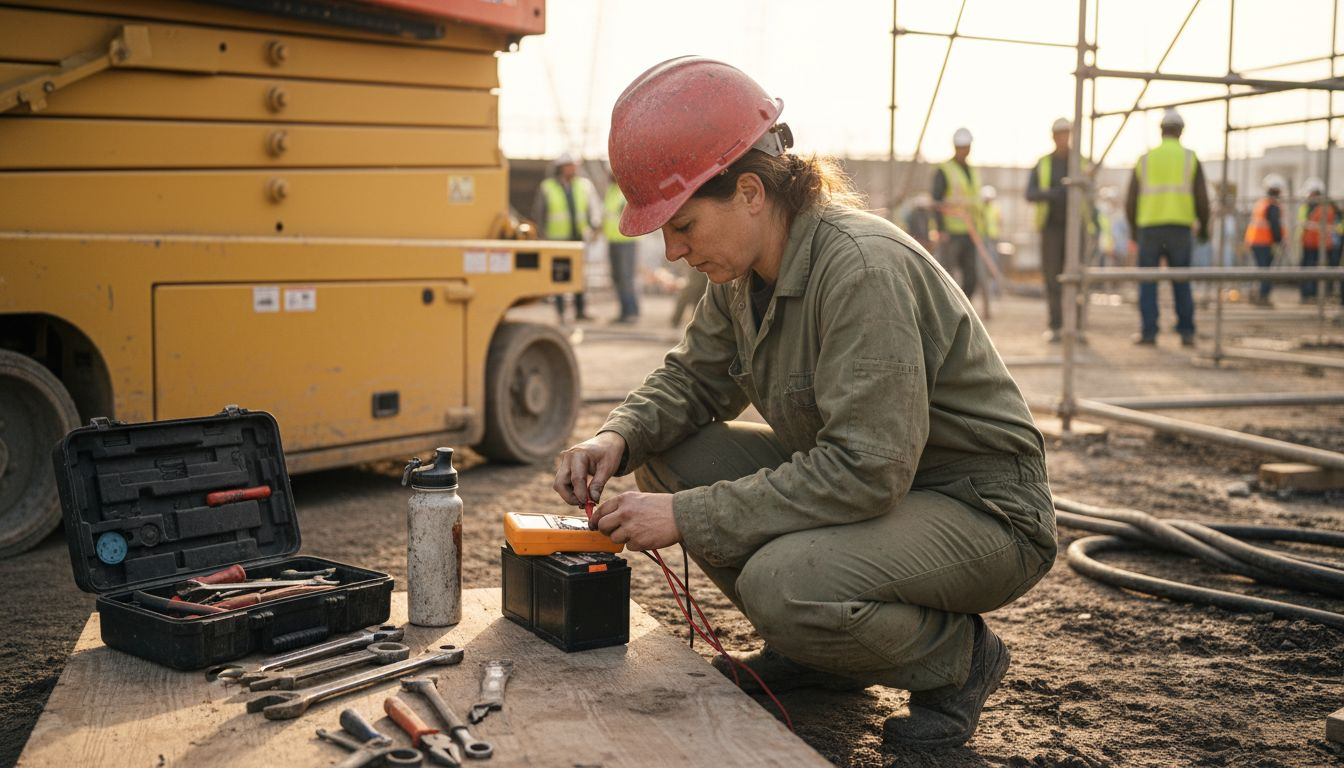
Pro tip: Always document your inspection findings and immediately report any equipment deficiencies to prevent potential safety risks.
Understanding and mastering scissor lift controls is essential for safe operation. Operator control requirements demand comprehensive knowledge of all safety mechanisms and control functions before attempting to operate the equipment.
Key control and safety features you must familiarize yourself with include:
Safety begins with complete understanding of your equipment’s operational capabilities.
Functional testing is critical. Practice each control systematically, ensuring smooth operation and responsiveness. Pay special attention to hold-to-run controls, which require continuous pressure to maintain movement and automatically stop when released. Verify all protective devices respond correctly and never attempt to bypass safety interlocks or warning systems.
Pro tip: Always mentally rehearse control functions before actual operation and request a demonstration from a certified trainer if you have any uncertainties.
Mastering safe scissor lift operation requires precise techniques and unwavering attention to safety protocols. Safe operation procedures demand comprehensive understanding of equipment handling and workplace awareness.
Key safe operation procedures include:
Safety is not an option – it’s the absolute requirement for scissor lift operation.
Platform positioning requires careful attention. Maintain stable footing within guardrails, keep body centered, and avoid leaning beyond platform boundaries. Your movements should be deliberate and controlled, with constant awareness of surrounding workspace conditions. Never override safety mechanisms or attempt unauthorized modifications to the equipment.
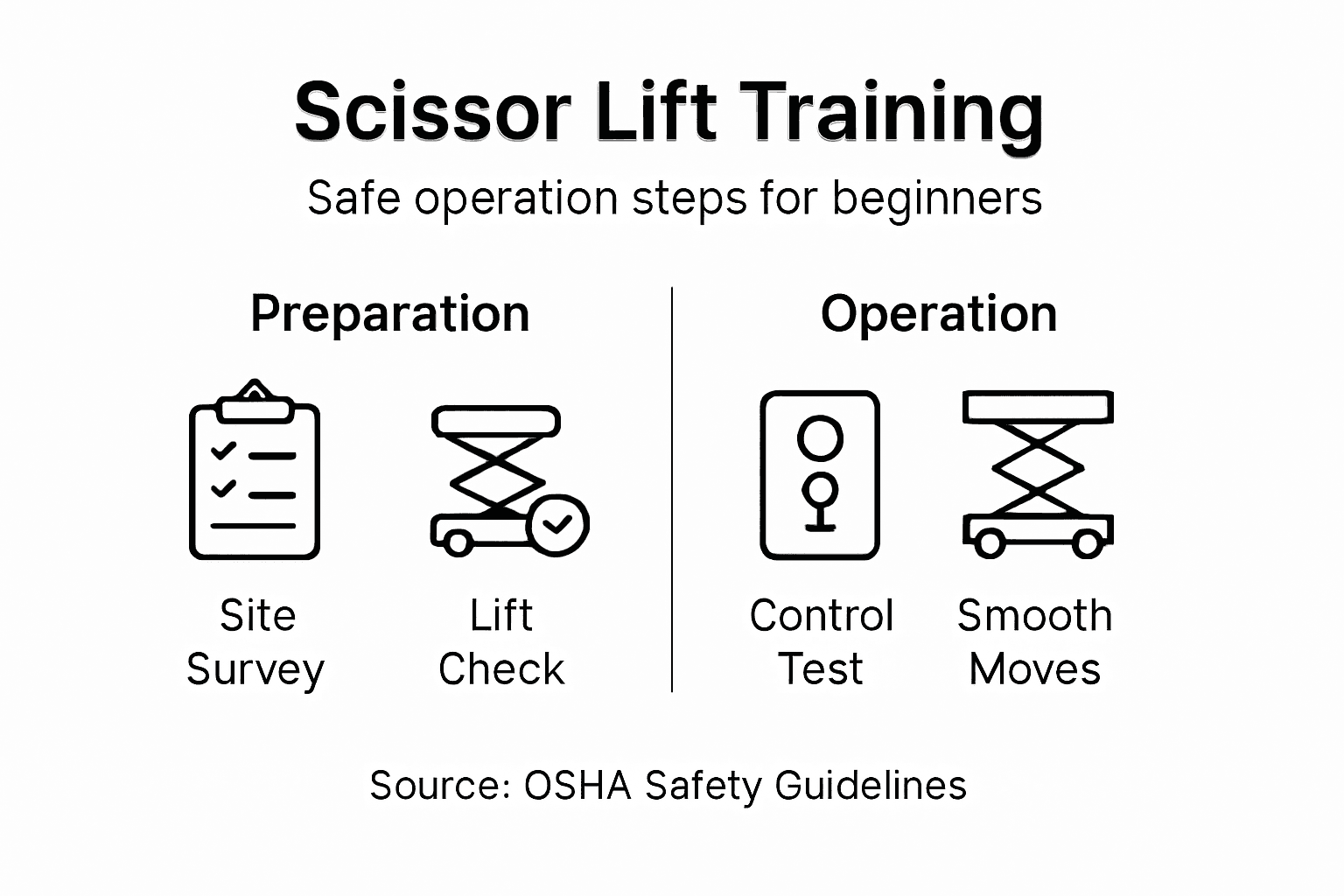
Pro tip: Practice smooth, calculated movements and always communicate with ground personnel during lift operations to maintain a comprehensive safety environment.
Ensuring operator competency is a critical component of workplace safety and regulatory adherence. OSHA training requirements mandate comprehensive skills verification and documentation for all scissor lift operators.
Key components of skills verification include:
Skill verification is not just a requirement – it’s a fundamental safety imperative.
Performance evaluation should be thorough and systematic. Operators must demonstrate complete understanding of manufacturer instructions, hazard recognition techniques, load management, and emergency procedures. Conduct skills assessments at least every three years, or more frequently if workplace conditions change or new equipment is introduced.
Compare scissor lift operator evaluation methods:
| Evaluation Method | What It Assesses | When to Use |
|---|---|---|
| Written test | Knowledge of safety standards | Initial and renewal |
| Practical demonstration | Hands-on proficiency | Before certification |
| Equipment review | Model-specific skill | New equipment rollout |
| Record check | Training documentation status | Annual audits |
Pro tip: Maintain detailed training records and create a standardized skills assessment checklist to ensure consistent and comprehensive operator evaluation.
Mastering the essential steps for safe scissor lift operation requires more than just knowledge it demands certified training that ensures compliance with OSHA standards and builds operator confidence. Whether you are just starting out or aiming to refresh your skills, addressing challenges like hazard assessment, equipment inspection, and skill verification is critical to safeguarding yourself and your workplace. Our Forklift Certification Archives provide tailored programs that focus on safe aerial work platform use with comprehensive lessons and real-world practice.
Don’t leave safety to chance protect your team and equipment by enrolling in expert-led training available both online and onsite across the United States and Canada. Visit Forkliftacademy.com today to explore practical courses and certification paths designed to turn beginners into skilled operators ready to handle any scissor lift safely. Start your journey now to become a confident and compliant lift operator.
Beginner scissor lift training starts with assessing workplace hazards and determining lift suitability. Inspect your work environment for challenges like uneven surfaces and overhead obstacles, and understand the specific lift’s operational capabilities to ensure safety before beginning any work.
To perform a safety inspection on a scissor lift, check critical components such as tires, hydraulic systems, control mechanisms, and safety devices. Ensure that all parts are in good condition and functioning properly; document any issues immediately to maintain a safe working environment.
Familiarize yourself with essential safety features such as emergency stop buttons, control panel layout, guardrail systems, and load limit indicators. Understand how each feature works and perform tests to ensure they operate correctly before using the lift.
Verifying operator skills is crucial to ensure compliance with safety protocols and effective equipment operation. Conduct written assessments and practical demonstrations periodically to confirm operators have the required knowledge and abilities, ideally every three years or whenever conditions change.
To ensure safe operation procedures, always wear personal protective equipment, keep the lift on level ground, and avoid moving the lift with the platform elevated. Establish clear communication with ground personnel and remain aware of your surroundings at all times while operating the lift.
A comprehensive site survey should include an evaluation of ground conditions, proximity to overhead hazards, and workspace clearance. Document potential risks and create a plan for mitigation to ensure all aspects of the worksite are safe and suitable for lift operation.




 Optimized by Seraphinite Accelerator