

Nearly 25 percent of American workplace injuries involve material handling equipment like pallet jacks, making safety preparation a critical first step. Without the right training environment and operator know-how, even routine tasks can lead to unnecessary risks. This guide breaks down clear, practical steps every American company needs to build confidence and meet safety standards when using pallet jacks.
| Key Insight | Explanation |
|---|---|
| 1. Ensure a Safe Training Environment | Clear the training area of obstacles and define zones to enhance safety for pallet jack operators. |
| 2. Conduct Thorough Pallet Jack Inspections | Perform regular checks on critical components to prevent safety issues and ensure equipment functionality before use. |
| 3. Master Pallet Loading Techniques | Center the load and maintain stability to prevent accidents, ensuring that it does not exceed capacity limits. |
| 4. Use Safe Operating Movements | Maintain proper body positioning and speed control while operating the pallet jack to reduce risks to yourself and others. |
| 5. Verify Competencies and Compliance | Implement a structured skills assessment and maintain documentation to ensure operators are qualified and compliant with OSHA regulations. |
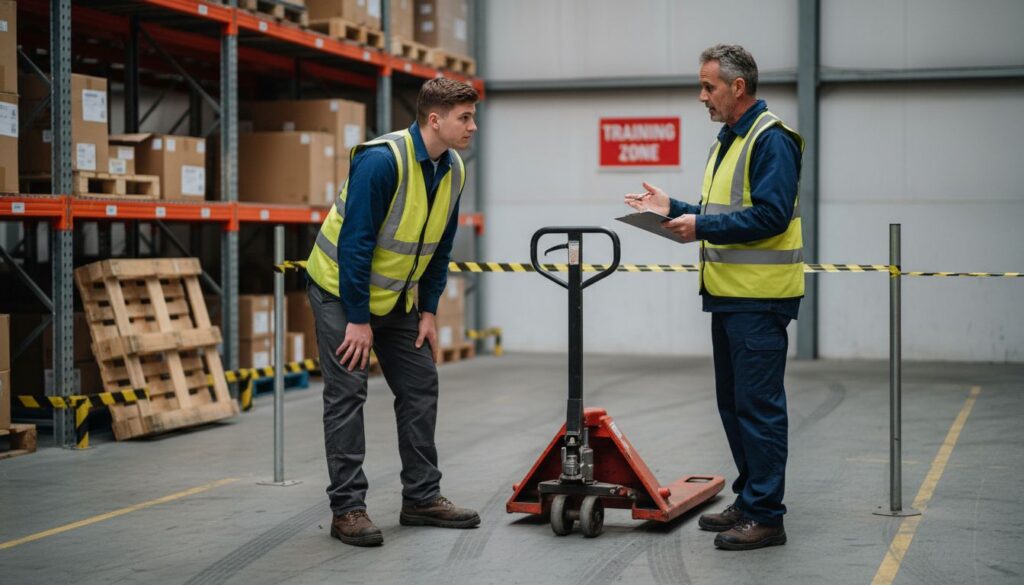
Creating a safe training space for pallet jack operation requires careful planning and attention to detail. Proper preparation helps minimize risks and ensures that new operators can learn effectively without unnecessary hazards. Site specific training guidelines recommend establishing a controlled environment that simulates realistic workplace conditions while maintaining maximum safety.
Start by clearing the designated training area of unnecessary obstacles, ensuring wide open spaces with minimal clutter. Mark specific training zones using bright floor tape or temporary barriers to define safe movement corridors. Remove tripping hazards like loose cables, tools, or extra equipment that could interfere with pallet jack maneuvers. The training area should have smooth, clean flooring without uneven surfaces or significant slope variations that could compromise control and stability.
Always perform a pre training safety inspection of the environment. Check floor conditions, verify adequate lighting, and confirm no overhead obstructions might interfere with equipment movement. Prepare safety equipment like protective footwear, high visibility vests, and gloves for trainees. Ensure fire extinguishers and first aid kits are nearby and easily accessible. By meticulously preparing the training space, you create a foundation for safe and effective pallet jack operator learning.
Pro tip: Keep the training area slightly smaller than actual warehouse spaces to help beginners build confidence without overwhelming them with complex navigation challenges.
Preparing a pallet jack for safe operation requires a thorough and methodical inspection process. Pallet jack inspection checklist guidelines recommend carefully examining every critical component before beginning any work. The goal is to identify potential safety issues and ensure the equipment is fully functional and ready for use.
Start by performing a comprehensive visual and functional inspection. Check the wheels for signs of wear or damage, ensuring they rotate smoothly without wobbling or significant flat spots. Examine the hydraulic system for any fluid leaks, which can compromise the jack’s lifting capabilities. Test the control handle and lifting mechanism carefully, verifying that it moves through its full range of motion without sticking or unusual resistance. Inspect the load forks for any bending, cracks, or structural damage that might compromise their strength and stability.

Verify all safety features are in perfect working condition. This includes checking the emergency stop mechanism, ensuring warning labels are clearly visible, and confirming that wheel brakes engage properly. Perform a test lift with a minimal load to validate the jack’s lifting and lowering functions. Pay close attention to any unusual sounds or movements that might indicate underlying mechanical issues. Always remember that a thorough inspection takes only a few minutes but can prevent potentially serious workplace accidents.
Pro tip: Keep a written inspection log for each pallet jack, documenting daily checks and any maintenance performed. This practice helps track equipment condition and provides a critical safety record for workplace compliance.
Mastering pallet jack loading techniques is crucial for workplace safety and efficiency. How to operate pallet jack techniques emphasize the importance of proper positioning and weight distribution to prevent accidents and equipment damage. Your goal is to create a stable load that can be moved safely and smoothly across the workplace.
Begin by carefully assessing the pallet and its contents before attempting to lift. Center the load precisely on the pallet jack forks, ensuring weight is evenly distributed from front to back and side to side. Check that items are stacked securely and not extending beyond the pallet edges. When positioning the forks, slide them completely under the pallet until they are fully inserted. Maintain a low center of gravity by keeping the load as close to the ground as possible during movement. Always approach pallets straight on and avoid angled or sideways approaches that could cause instability.
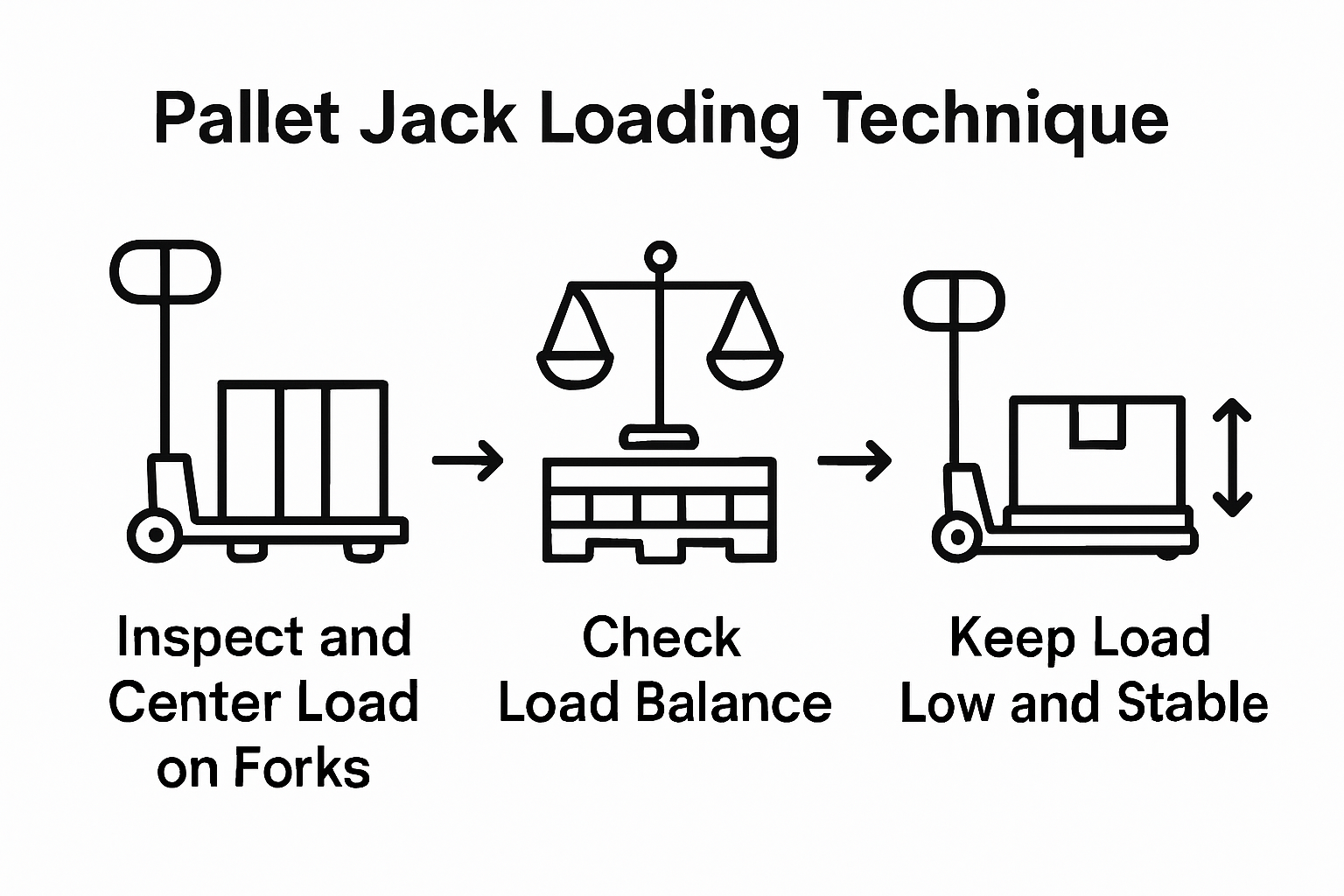
Pay special attention to load weight limits and balance. Never exceed the manufacturer recommended weight capacity for your specific pallet jack model. Secure loose items with shrink wrap or strapping to prevent shifting during transport. When moving the loaded pallet, maintain a slow and steady pace, using smooth acceleration and deceleration. Keep your body positioned to the side of the pallet jack for maximum visibility and control. Watch for potential obstacles or uneven surfaces that could compromise load stability.
Pro tip: Before moving any loaded pallet, perform a quick stability test by gently lifting the load a few inches and checking for any wobbling or uneven weight distribution.
Safe pallet jack operation requires careful technique and constant awareness. Understanding pallet jack functionality is critical for preventing workplace accidents and ensuring smooth material handling. Your primary goal is to maintain control while minimizing risk to yourself and surrounding workers.
Maintain proper body positioning throughout operation by keeping your body to the side of the pallet jack and maintaining a clear line of sight. Push the pallet jack whenever possible instead of pulling it behind you this provides better control and visibility. Use both hands on the control handle maintaining a firm grip and keeping your fingers away from potential pinch points. When navigating turns move slowly and deliberately make wide sweeping turns and avoid sharp angles that could destabilize the loaded pallet. Always check your surrounding environment for obstacles pedestrians or uneven surfaces that might compromise safe movement.
Pay close attention to your speed and movement patterns. Start and stop smoothly to prevent load shifting or potential tipping. Keep the load low to the ground during transport to maintain stability and reduce the risk of accidents. When approaching turns or tight spaces reduce your speed and approach at a controlled pace. Maintain at least an arms length distance from other workers and equipment. Be particularly cautious when moving through doorways intersections or areas with limited visibility.
Pro tip: Before moving any loaded pallet practice your route mentally visualizing potential challenges and planning your movements to minimize sudden changes in direction or unexpected obstacles.
Ensuring complete OSHA compliance requires a comprehensive skills verification process for pallet jack operators. OSHA compliance guide for operator qualifications highlights the critical importance of systematic skills assessment and documentation to maintain workplace safety standards. Your objective is to confirm that each operator demonstrates both theoretical knowledge and practical proficiency.
Conduct a thorough practical evaluation that tests the operator’s ability to perform key pallet jack maneuvers. This assessment should include precise loading techniques navigating tight spaces making controlled turns and responding to simulated workplace scenarios. Verify the operator can demonstrate proper pre operation inspection techniques load balancing skills and understanding of safety protocols. Document each assessment carefully recording specific performance metrics observation notes and areas requiring additional training. Pay special attention to the operators ability to maintain situational awareness identify potential hazards and respond appropriately to unexpected challenges during equipment operation.
Implement a structured skills verification process that includes written examinations practical skills tests and periodic performance reviews. Ensure operators understand and can articulate key OSHA safety regulations related to material handling equipment. Review their ability to recognize equipment limitations understand weight restrictions and apply safe operating principles consistently. Maintain comprehensive training records that include initial certifications renewal dates skills assessments and any additional training completed. These documentation practices not only ensure regulatory compliance but also create a clear record of workforce competency.
Pro tip: Create a standardized skills assessment checklist with specific performance criteria to ensure consistent and objective evaluation of operator capabilities.
Mastering safe pallet jack operation is essential to preventing workplace accidents and improving efficiency. This guide highlighted critical steps like preparing your training environment, inspecting equipment, and verifying operator skills to ensure OSHA compliance. Many beginners and safety managers struggle with consistently applying these safety procedures to reduce risks effectively and build confidence.
Don’t leave safety to chance. Unlock your full potential with comprehensive training solutions designed to meet OSHA standards and boost operator competence. Explore expert insights, step-by-step courses, and evaluation tools in our Forklift Safety Archives to deepen your understanding and practical skills.
Take the next step in your journey toward safer material handling today. Visit Forkliftacademy.com for tailored certification programs and expert training that prepare you for real-world challenges. Whether you need individual certification or business-wide onsite training, our resources empower you to operate with confidence and comply with safety regulations.
To ensure a safe training environment, start by clearing the designated training area of obstacles. Ensure there are wide open spaces and mark training zones to define safe movement corridors.
Perform a thorough visual and functional inspection of the pallet jack. Check wheels for wear, examine the hydraulic system for leaks, and verify that safety features are operational before each use.
Begin by centering the load on the pallet jack forks, ensuring balanced weight distribution. Keep the load low to the ground during movement to maintain stability and avoid shifting.
Maintain proper body positioning by staying to the side of the pallet jack and pushing it instead of pulling. Move at a controlled pace, keeping an eye out for obstacles and ensuring smooth starts and stops to prevent load shifting.
Conduct practical evaluations that test loading techniques and maneuvering skills. Document performance metrics and ensure operators understand safety regulations to maintain compliance.
Yes, setting up a training area slightly smaller than actual warehouse spaces can help beginners build confidence. This allows for easier navigation and reduces the complexity of learning during initial training.