
Most warehouse managers believe years of forklift experience equals safety expertise. This dangerous assumption costs facilities thousands in preventable accidents annually. OSHA-compliant training reduces forklift incidents by up to 70%, proving structured certification outperforms experience alone. This guide breaks down why workplace safety through proper training matters, how certification works, and actionable steps to protect your team.
Table of Contents
- Why Workplace Safety Is Critical in Warehouse Settings
- Role and Importance of OSHA-Compliant Forklift Training
- Common Forklift Accident Causes and Misconceptions
- Comparison of Forklift Training Methods
- Quantified Impacts of Safety Improvements
- Practical Steps for Implementing Effective Training
- Bridging Understanding to Practical Application
- Explore OSHA-Compliant Forklift Training Solutions
- Frequently Asked Questions
Key Takeaways
| Point | Details |
|---|---|
| Training Impact | OSHA-compliant programs reduce forklift incidents by up to 70% compared to experience-only operators. |
| Human Error Dominance | 87% of forklift accidents stem from operator mistakes, not equipment failure. |
| Training Method Flexibility | Online, onsite, and hybrid options allow customization based on warehouse size and operational needs. |
| Regulatory Compliance | Annual refresher training maintains OSHA standards and prevents costly violations. |
| Economic Benefits | Certified training lowers insurance costs, reduces downtime, and improves operational efficiency. |
Why Workplace Safety Is Critical in Warehouse Settings
Warehouse injuries drain nearly $14 billion annually from U.S. businesses through direct medical costs, lost productivity, and legal fees. Beyond the financial toll, each accident represents human suffering and family disruption that ripples through your workforce.
OSHA regulations exist because forklift incidents cause serious injuries and fatalities when operators lack proper training. Compliance is not optional. Violations trigger fines, operational shutdowns, and reputational damage that can cripple your business.
The economic stakes extend far beyond immediate costs:
- Workers’ compensation claims spike insurance premiums for years
- Equipment damage requires expensive repairs and replacement
- Production delays cascade through supply chains
- Legal liability exposes facilities to lawsuits and regulatory penalties
- Employee morale suffers when safety culture fails
Every untrained forklift operator represents a liability walking your warehouse floor. The question is not whether you can afford safety training, but whether you can afford the consequences of skipping it.
Role and Importance of OSHA-Compliant Forklift Training
Certified forklift operators reduce workplace incidents by up to 70% compared to untrained peers. This dramatic improvement stems from standardized instruction covering equipment operation, hazard recognition, and emergency response protocols.
OSHA mandates initial training plus evaluation for all powered industrial truck operators. Refresher training occurs every three years or after accidents, near misses, and equipment changes. These requirements ensure operators maintain current knowledge as technology and procedures evolve.
Understanding the role of forklift safety training reveals how certification protects both workers and business operations. Training covers load capacity calculations, stability principles, pedestrian awareness, and maintenance inspection procedures that prevent equipment failures.
The benefits extend beyond regulatory checkboxes:
- Operators gain confidence to handle challenging situations safely
- Supervisors reduce time spent correcting unsafe behaviors
- Insurance providers recognize certified workforces with lower premiums
- Equipment lasts longer when operated according to manufacturer specifications
- Productivity increases when operators work efficiently without shortcuts
Pro Tip: Schedule training during slower operational periods to minimize disruption. Coordinate with your training provider to batch certifications, reducing downtime while ensuring comprehensive coverage.
When you implement forklift safety training systematically, you create a foundation for sustained safety culture. Following proper OSHA forklift training steps ensures compliance while building operator competence that translates directly to safer warehouse operations.
Common Forklift Accident Causes and Misconceptions
Human error drives 87% of forklift accidents, not mechanical failures or uncontrollable circumstances. This statistic demolishes the myth that experienced operators automatically operate safely. Complacency from familiarity often creates more risk than inexperience.
The most dangerous misconception managers face is believing years behind the wheel substitute for formal certification. Experience teaches bad habits as easily as good ones. Without structured training, operators repeat unsafe practices that eventually cause injuries.
Operator fatigue during peak hours spikes accident rates dramatically. Warehouse managers scheduling extended shifts without breaks create conditions where even trained operators make critical mistakes. Fatigue impairs judgment, slows reaction time, and reduces hazard awareness.
“The greatest risk in any warehouse is assuming safety happens automatically. Proactive training and fatigue management separate safe operations from preventable disasters.”
Common accident triggers include:
- Inadequate load securing leading to tip overs and falling cargo
- Excessive speed around corners or through congested areas
- Poor visibility when operating in reverse without spotters
- Mixing pedestrian traffic with forklift operations without clear zones
- Ignoring pre-shift equipment inspections that catch mechanical issues
Effective forklift accident prevention strategies address these root causes through training reinforcement and operational controls. Regular refreshers combat complacency while scheduling policies prevent fatigue-related incidents during your busiest periods.
Comparison of Forklift Training Methods
Choosing the right training format impacts both compliance and operational efficiency. Each method offers distinct advantages depending on your warehouse size, budget constraints, and scheduling flexibility.
| Training Method | Compliance | Cost | Flexibility | Hands-On Component |
|---|---|---|---|---|
| Online Only | Partial (requires evaluation) | $$ | High | External required |
| Onsite Training | Full | $$$$ | Low | Included |
| Hybrid | Full | $$$ | Medium | Included |
Online training delivers theoretical knowledge through self-paced modules operators complete remotely. This format costs less and allows scheduling around operational demands. However, OSHA requires hands-on evaluation onsite to verify practical skills, so online alone never satisfies full certification requirements.
Onsite training brings instructors to your facility for comprehensive classroom and practical sessions. Operators learn on equipment they use daily in their actual work environment. This method provides immediate engagement but requires coordinating schedules and dedicating workspace for training activities.

Hybrid approaches combine online theory with onsite practical evaluation, balancing cost efficiency and compliance. Operators complete knowledge modules independently, then demonstrate skills during brief onsite assessments. This format minimizes facility disruption while ensuring full OSHA compliance.
Key selection factors:
- Warehouse size determines whether bringing instructors onsite is cost effective
- Equipment variety requires training on specific forklift types operators use
- Operator schedules influence whether self-paced online components help
- Budget constraints may favor hybrid over full onsite programs
Reviewing an onsite forklift training guide helps managers understand logistics and preparation requirements. The comprehensive OSHA forklift certification guide clarifies compliance standards across all training formats.
Quantified Impacts of Safety Improvements
Data proves comprehensive forklift safety programs deliver measurable returns beyond compliance checkboxes. Facilities implementing OSHA-compliant training see incident reductions up to 70%, translating directly to lower costs and improved productivity.
| Metric | Before Training | After Training | Improvement |
|---|---|---|---|
| Incident Rate | 12 per 100 operators | 3.6 per 100 operators | 70% reduction |
| Equipment Damage Costs | $45,000 annually | $18,000 annually | 60% decrease |
| Lost Time Injuries | 8 per year | 2 per year | 75% reduction |
| Insurance Premiums | Baseline | 15-25% lower | Significant savings |
Accident reductions improve worker safety while simultaneously cutting operational costs. Each prevented injury eliminates medical expenses, workers’ compensation claims, and productivity losses from absent team members.
Operational efficiency gains emerge when certified operators handle equipment properly. Trained workers complete tasks faster without sacrificing safety, reduce product damage through proper load handling, and minimize equipment wear through correct operation techniques.
The OSHA forklift recertification impact becomes apparent when tracking long-term trends. Facilities maintaining regular refresher schedules sustain safety improvements while those skipping recertification see incident rates creep upward as skills degrade.
Pro Tip: Track your facility’s incident rates, damage costs, and downtime before and after implementing comprehensive training. Quantified improvements justify continued investment and demonstrate ROI to stakeholders questioning safety program budgets.
Economic benefits compound over time as insurance providers recognize sustained safety records with premium reductions. Some carriers offer discounts up to 25% for facilities maintaining certified workforces and documented training programs.
Practical Steps for Implementing Effective Training
Successful training implementation requires systematic planning beyond simply scheduling certification courses. Follow these steps to build a comprehensive program that maintains compliance and maximizes safety benefits.
- Assess Current Training Gaps: Audit existing operator skills, review incident reports, and identify equipment types requiring certification. Document which operators need initial training versus refreshers.
- Select Accredited Providers: Verify training programs meet OSHA standards and include both classroom instruction and practical evaluation. Check provider credentials and review course content for completeness.
- Schedule Strategic Training Sessions: Coordinate certification timing to minimize operational disruption while ensuring coverage. Batch training when possible to reduce downtime and leverage group rates.
- Plan for Fatigue Management: Structure shifts to prevent operator exhaustion during peak periods. Implement break schedules and rotate assignments to maintain alertness throughout demanding operations.
- Integrate with Safety Culture: Connect forklift training to broader workplace safety initiatives. Reinforce training concepts through regular toolbox talks and supervisor coaching.
- Establish Refresher Protocols: Calendar annual recertification before certifications expire. Track expiration dates systematically to avoid compliance gaps.
- Document Everything: Maintain training records, certification cards, and evaluation results. Organized documentation proves compliance during OSHA inspections and insurance audits.
When you implement forklift safety training systematically, you create sustainable safety improvements rather than temporary compliance. Using a comprehensive forklift safety checklist ensures you address all regulatory requirements while building operator competence.
Bridging Understanding to Practical Application
Forklift safety training achieves maximum effectiveness when integrated into your facility’s overall safety culture rather than treated as an isolated compliance requirement. Standalone certification satisfies regulations but misses opportunities to reinforce safe behaviors daily.
Facilities documenting the greatest long-term injury reductions combine formal training with supportive policies, supervisor engagement, and continuous reinforcement. Safety becomes part of how work gets done, not an extra burden operators resent.
Integration strategies that multiply training impact:
- Supervisors model safe behaviors and immediately correct unsafe practices
- Pre-shift meetings reinforce training concepts relevant to daily operations
- Incident investigations identify training gaps and trigger targeted refreshers
- Recognition programs reward operators demonstrating exemplary safety practices
- Equipment maintenance schedules ensure forklifts remain in safe operating condition
Alignment between training content and actual operational procedures eliminates confusion about expectations. When operators see management prioritizing safety through actions beyond training requirements, they internalize lessons more deeply.
Developing strong forklift hazard awareness across your entire team, including non-operators, creates a safer environment where everyone watches for risks. Pedestrians who understand forklift limitations behave more cautiously in mixed traffic areas.
Sustained compliance and safety require ongoing commitment beyond initial certification. Treat training as the foundation of a comprehensive safety strategy, not the entire solution. Regular reinforcement, equipment maintenance, and policy enforcement work together to protect your workforce while optimizing operations.
Explore OSHA-Compliant Forklift Training Solutions
Transforming your warehouse safety starts with accessible, comprehensive training tailored to your operational needs. Whether you manage a small facility or coordinate multiple locations, flexible certification options ensure every operator meets OSHA standards.
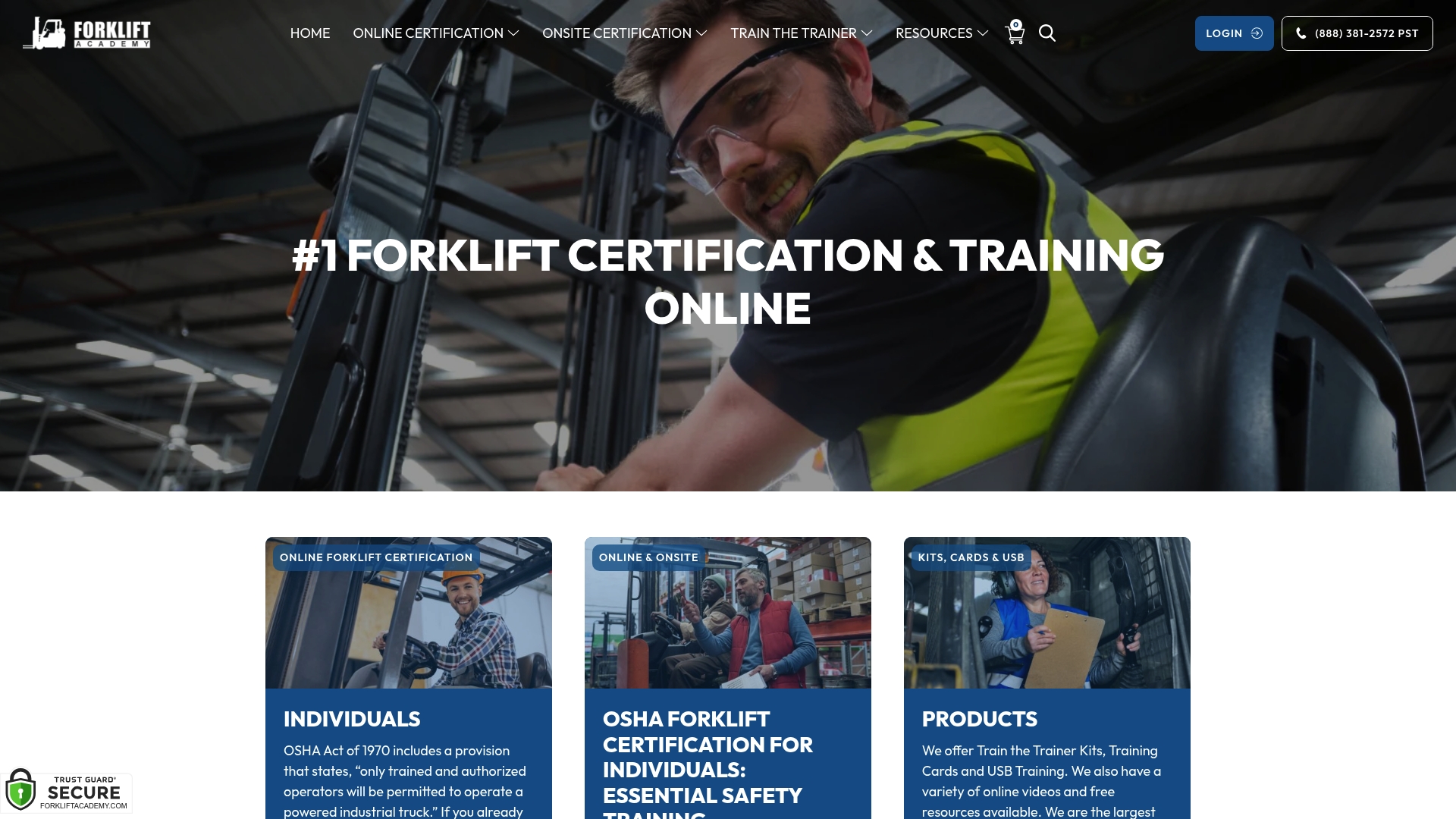
Online and onsite programs adapt to your scheduling constraints while delivering thorough instruction on equipment operation, hazard recognition, and emergency procedures. The train the trainer online program empowers your internal team to conduct ongoing training, reducing long-term costs while maintaining quality. Explore complete forklift training programs designed for individual operators or entire teams. For hands-on instruction at your facility, onsite forklift training brings certified instructors directly to your warehouse floor, minimizing disruption while maximizing engagement with equipment your team uses daily.
Frequently Asked Questions
Why Is OSHA-Compliant Forklift Training Essential?
OSHA requires all powered industrial truck operators to complete formal training and evaluation before operating equipment independently. Compliance prevents regulatory fines while dramatically reducing accident rates. Certified operators understand load capacity, stability principles, and hazard recognition that prevent the human errors causing 87% of forklift incidents.
How Often Should Forklift Operators Receive Refresher Training?
OSHA mandates evaluation every three years as a minimum standard. Additional refresher training becomes necessary after accidents, near misses, observed unsafe operation, or changes to equipment types. Many facilities schedule annual refreshers to maintain skills and reinforce safety culture proactively.
Can Online Training Alone Fulfill OSHA Forklift Training Requirements?
Online courses satisfy theoretical knowledge requirements but cannot replace hands-on evaluation. OSHA explicitly requires practical assessment of operator skills on actual equipment in the work environment. Hybrid programs combining online theory with onsite evaluation offer the most flexible path to full compliance.
What Is the Most Common Cause of Forklift Accidents?
Human error accounts for 87% of forklift incidents, far exceeding mechanical failures or environmental factors. Operator mistakes include excessive speed, improper load handling, inadequate visibility checks, and fatigue during peak hours. Comprehensive training directly addresses these behavioral risks through skill development and hazard awareness.
How Does Forklift Safety Training Reduce Warehouse Costs?
Certified operators cause fewer accidents, reducing workers’ compensation claims, equipment damage, and production downtime. Insurance providers recognize trained workforces with premium discounts up to 25%. Improved operational efficiency from proper equipment handling further lowers costs while extending forklift service life through reduced wear.
Recommended
- Role of Safety Training: Reducing Forklift Risks – Top Osha Forklift Certification
- OSHA Training Guide 2025 for Forklift Certification Success – Top Osha Forklift Certification
- OSHA Recertification: 30% Fewer Forklift Accidents Explained – Top Osha Forklift Certification
- Forklift Accident Prevention: OSHA Solutions That Work – Top Osha Forklift Certification