
Managing a busy warehouse means every shift brings new safety risks that demand real attention. For American logistics managers, keeping crews safe and meeting OSHA requirements is not just about following rules—it is about protecting workers and avoiding costly disruptions. This article breaks down OSHA-compliant forklift training and explains how tailored programs help your team recognize hazards, build practical skills, and maintain compliance so your operation runs smoothly every day.
Table of Contents
- Defining Safety Training In Warehouse Operations
- Types Of Safety Training And OSHA Standards
- How Safety Training Reduces Accidents And Enhances Efficiency
- Legal And Regulatory Requirements For Forklift Certification
- Risks Of Non-Compliance And Common Safety Mistakes
Key Takeaways
| Point | Details |
|---|---|
| Tailored Safety Training | Warehouse safety training should be site-specific, addressing unique hazards relevant to the facility for effective risk management. |
| Comprehensive Training Components | Effective training includes formal instruction, hands-on practice, and competency evaluations to ensure workers can perform tasks safely. |
| Legal Requirements | Compliance with OSHA standards is mandatory, including proper documentation and regular refresher training to avoid penalties. |
| Impact on Operations | Investing in safety training reduces accidents, minimizes downtime, and enhances overall efficiency and employee morale. |
Defining Safety Training in Warehouse Operations
Warehouse safety training is far more than a checkbox compliance exercise. It’s a structured approach to equipping your team with the knowledge and skills needed to identify hazards, implement controls, and work safely every single day. This goes beyond generic safety videos—it’s tailored to the specific risks in your facility.
What Warehouse Safety Training Actually Covers
Effective safety training in warehouses encompasses several critical areas:
- Understanding and identifying workplace hazards specific to your operation (forklift dangers, stacking risks, falls from heights)
- Proper use and maintenance of personal protective equipment (hard hats, safety shoes, high-visibility vests, gloves)
- Safe procedures for equipment operation, particularly material handling devices
- Emergency response protocols and evacuation procedures
- Compliance with applicable OSHA standards and requirements relevant to warehouse operations
The foundation of warehouse safety training involves professional diligence and foresight to identify and control workplace hazards before they cause injuries or fatalities.
Why Site-Specific Training Matters
A generic safety program won’t cut it. Your warehouse has unique hazards based on your layout, equipment, product types, and workflow. Training needs to address your specific environment, not some template that applies to every facility.
Workers who receive site-specific training understand the actual risks they face during their shifts. They recognize hazards in your loading dock, understand how your racking system could fail, and know proper procedures for your equipment configuration.
The Connection Between Training and Compliance
OSHA requires more than just having safety policies on paper. Your workers must possess the knowledge and skills to perform their tasks safely. This is where training bridges the gap between regulation and real-world workplace safety.
When safety training is delivered properly, workers internalize safe practices rather than simply following rules they don’t understand.
Effective warehouse safety training doesn’t just tell workers what to do—it teaches them why it matters and how to stay safe when no one’s watching.
The Role of Qualified Trainers
While many warehouse managers can deliver basic safety information, qualified trainers bring expertise that catches overlooked risks. They understand industry best practices, current OSHA guidance, and how to communicate safety concepts so they actually stick with your team.
Proper training uses a combination of classroom instruction, demonstrations, hands-on practice, and evaluation to confirm workers truly understand and can apply what they’ve learned.
Pro tip: Schedule safety training during slower warehouse periods and require all shift supervisors to participate first, so they can reinforce training concepts with their teams daily and answer real-time questions.
Types of Safety Training and OSHA Standards
OSHA doesn’t mandate a one-size-fits-all approach to safety training. Instead, different warehouse operations require different training types based on the specific hazards your team encounters. Understanding which training applies to your facility ensures you’re meeting federal requirements while actually protecting your workers.
Core Training Types in Warehouse Operations
Warehouse safety training falls into several categories, each addressing different hazards:
- Hazard identification and risk assessment training teaches workers to spot dangers before accidents happen
- Equipment-specific training covers operation of forklifts, pallet jacks, and other powered industrial trucks
- Emergency preparedness training ensures workers know evacuation routes, assembly points, and emergency procedures
- Personal protective equipment training explains proper selection, use, and maintenance of safety gear
- Bloodborne pathogens and chemical safety (if applicable to your warehouse operations)
OSHA provides comprehensive training materials and standards covering each of these areas, ensuring your programs meet federal requirements.
OSHA Standards That Drive Training Requirements
OSHA regulations specify training requirements for different warehouse hazards. If your facility uses forklifts, OSHA 1910.178 mandates operator certification and training. Fall protection work requires training under 1910.268. Each standard details what workers must know and how they must demonstrate competency.
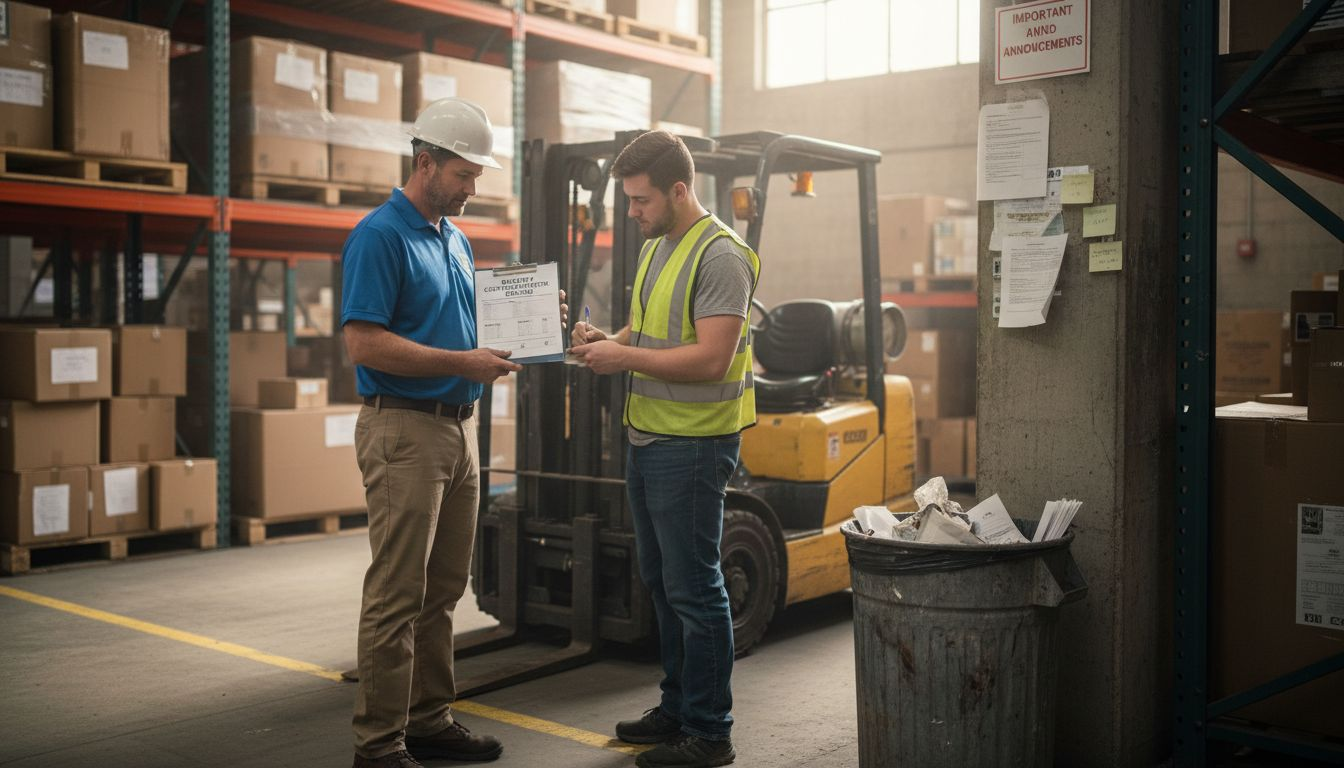
These aren’t suggestions. They’re legal requirements with potential penalties for non-compliance.
Formal Instruction vs. Hands-On Practice
Effective safety training combines multiple delivery methods. Formal instruction through lectures and videos provides knowledge. Hands-on practice ensures workers can actually perform tasks safely.
The best warehouse safety training includes both classroom learning and practical demonstrations, with performance evaluations proving workers understand and can apply what they’ve learned.
Performance Evaluation and Competency
Training isn’t complete until workers demonstrate they understand the material. Competency evaluations might include written tests, practical demonstrations, or observed performance on the job. This step catches gaps in understanding before workers face real hazards.
When workers pass evaluations, you have documentation proving they received proper training—essential if OSHA investigates an incident.
Continuous Improvement and Retraining
OSHA standards expect you to update training when procedures change, equipment is replaced, or hazards shift. Many facilities implement refresher training annually or when incidents reveal training gaps. This demonstrates commitment to ongoing safety culture.
Here’s a summary of how different training methods impact warehouse safety:
| Training Method | Typical Delivery | Impact on Safety | Documentation Required |
|---|---|---|---|
| Classroom Instruction | Lectures and slides | Knowledge foundation | Training logs and attendance |
| Hands-On Practice | Supervised equipment use | Real-world skill building | Demonstration checklists |
| Emergency Drills | Simulated scenarios | Faster response times | Drill records and evaluations |
| Refresher Courses | Annual or incident-based | Sustained safety awareness | Retraining schedules |
Pro tip: Document all training completion dates and evaluation scores; maintain these records for at least three years in case OSHA requests them during an inspection.
How Safety Training Reduces Accidents and Enhances Efficiency
Safety training does more than check a compliance box. It directly impacts your bottom line by reducing incidents, minimizing downtime, and boosting productivity. Warehouses that invest in proper training see measurable improvements across multiple operational areas.
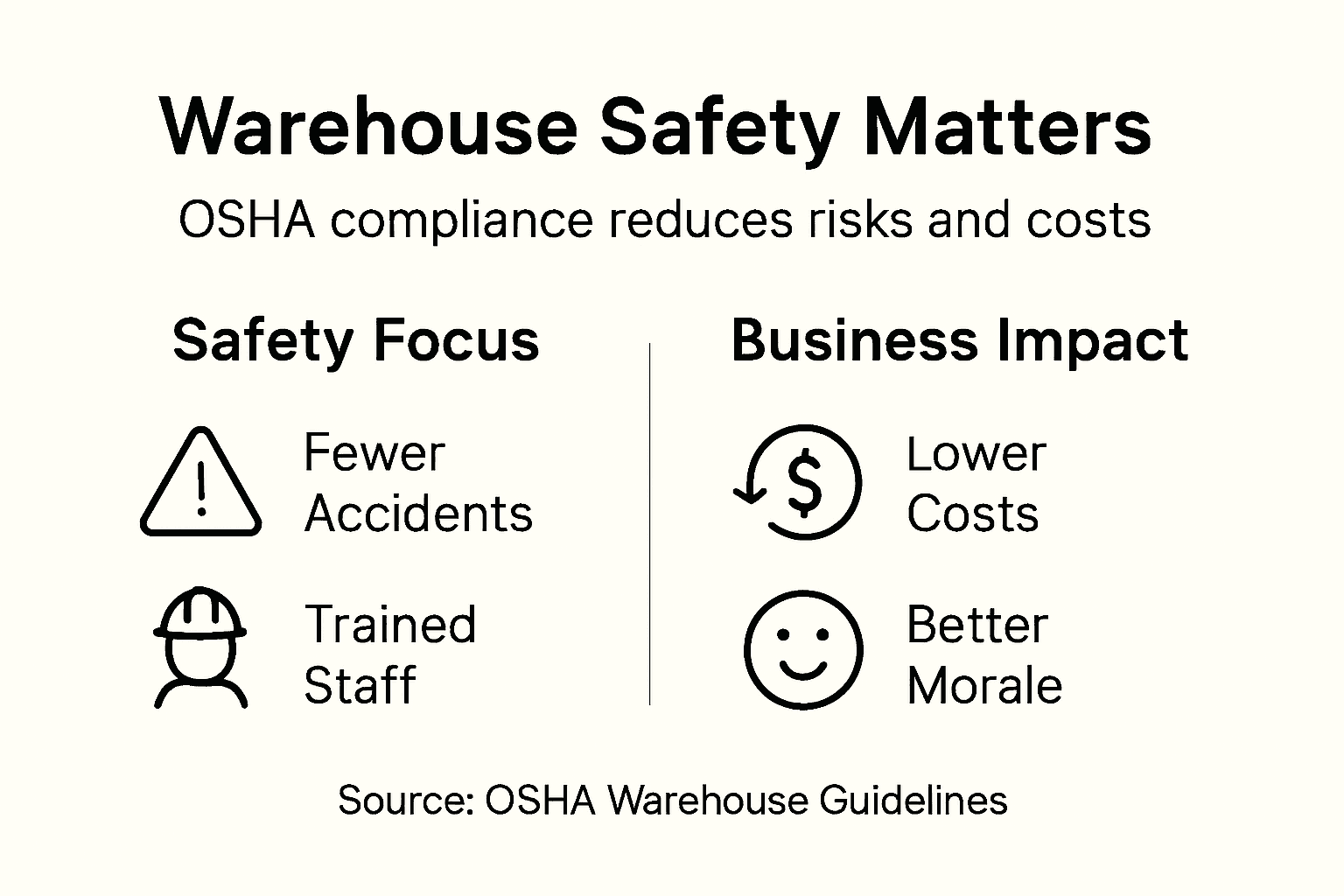
The Direct Link Between Training and Fewer Accidents
When workers understand hazards and know how to work safely, accidents drop significantly. Proper training on forklift operation, load handling, and equipment maintenance prevents the injuries that shut down operations and drain resources.
Companies investing in workplace safety improvements experience fewer incidents and reduced downtime. This isn’t theoretical—it’s documented across industries.
How Fewer Accidents Save Money
Each workplace injury carries hidden costs beyond medical expenses:
- Lost productivity from injured workers and coverage gaps
- Equipment damage from improper operation
- Regulatory fines for non-compliance
- Higher insurance premiums following incidents
- Retraining costs when experienced workers leave due to injuries
Preventing just one serious injury often pays for years of safety training.
Enhanced Worker Competence Drives Efficiency
Trained workers perform tasks faster and more accurately. They make better decisions about load weights, stacking heights, and safe procedures. This competence translates directly to operational efficiency.
Safety training that emphasizes hazard recognition and proper equipment use creates a workforce that works both safer and smarter.
Improved Employee Morale and Retention
Workers who feel safe are more engaged and loyal. When management demonstrates commitment to their wellbeing through comprehensive training, staff turnover drops. Retaining experienced workers means less retraining and more consistent performance.
This morale boost isn’t just nice to have—it affects your ability to maintain skilled teams.
Better Collaboration and Communication
Effective safety programs bring management and workers together to identify and solve problems. This collaboration improves communication across all operational areas, not just safety. Workers feel heard, and management gains valuable insights into workflow challenges.
This stronger team dynamic supports higher-quality outputs and sustained productivity improvements.
Pro tip: Track and share safety metrics monthly with your team—near-misses, incident-free days, and productivity gains—so workers see the tangible connection between safety training and operational success.
Legal and Regulatory Requirements for Forklift Certification
Forklift certification isn’t optional. OSHA mandates it. The legal requirements are clear, enforceable, and come with penalties for non-compliance. Understanding these regulations protects your workers and your business.
OSHA 1910.178: The Federal Mandate
OSHA regulation 29 CFR 1910.178 is the cornerstone of forklift certification law. It requires all powered industrial truck operators to receive formal training, practical hands-on instruction, and performance evaluation before operating any forklift. This isn’t a suggestion—it’s a federal requirement.
Employers bear full responsibility for certifying operator competency. If an operator causes an incident and you can’t document their training, you face significant liability.
What Training Content Must Include
Forklift training standards mandate specific content areas that your program must cover:
- Safe operation principles and techniques
- Equipment inspection and maintenance procedures
- Refueling and charging protocols
- Workplace hazard recognition and navigation
- Load handling and stacking limits
- Incline operation and stability concepts
Omitting any of these areas creates compliance gaps that OSHA will cite during inspections.
Training Components: Three Parts Required
Compliant training isn’t just a video. It requires three distinct components:
- Formal classroom instruction covering safety principles and equipment operation
- Hands-on practical training where operators practice under supervision
- Performance evaluation proving competency before independent operation
Each component serves a legal purpose. Skipping any component puts you out of compliance.
Annual Refresher Training and Retraining
OSHA requires refresher training at least annually. You must also provide retraining immediately when operators demonstrate unsafe behaviors or when workplace conditions change significantly. This ongoing requirement keeps your program current and your workers sharp.
Documentation is your legal shield—maintain detailed records of all training dates, content covered, evaluators involved, and evaluation results for at least three years.
State-Specific Requirements
Some states operate their own OSHA-approved plans with stricter standards than federal requirements. Check your state’s specific rules, as they may mandate more frequent refresher training or additional certification requirements beyond federal minimums.
Documentation and Compliance Records
You must maintain comprehensive training documentation. If OSHA investigates an incident, your records prove compliance or expose gaps. Incomplete records suggest inadequate training and invite citations.
Pro tip: Create a digital forklift operator database tracking each worker’s training completion date, evaluation scores, and refresher due dates; set automatic reminders 30 days before refresher deadlines to maintain continuous compliance.
Risks of Non-Compliance and Common Safety Mistakes
Ignoring safety training requirements doesn’t save money. It costs it. Warehouses that cut corners on compliance face penalties, lawsuits, injuries, and operational chaos. Understanding what goes wrong helps you avoid the same traps.
The Financial and Legal Consequences of Non-Compliance
OSHA violations carry steep penalties. A serious violation can cost $10,000 or more per incident. Repeat violations multiply that cost. Beyond fines, you face workers’ compensation claims, lawsuits from injured employees, and potential criminal liability for management.
Non-compliance with occupational safety standards creates legal exposure that extends beyond financial penalties. Your company’s reputation suffers, insurance rates increase, and attracting quality workers becomes harder.
Quickly compare the consequences of warehouse safety compliance versus non-compliance:
| Category | When Compliant | When Non-Compliant |
|---|---|---|
| Operational Downtime | Minimal; rare disruptions | Frequent shutdowns, longer delays |
| Financial Impact | Stable costs, lower insurance | Fines, lawsuits, rising premiums |
| Employee Morale | Higher engagement, retention | Fear, turnover, lost experience |
| Regulatory Risk | Rare audits, positive reputation | Citations, damaged public image |
Common Safety Mistakes in Warehouse Operations
Most compliance failures stem from predictable errors:
- Inadequate hazard identification means risks go unrecognized and uncontrolled
- Skipping hands-on training creates operators who understand rules but can’t apply them safely
- Poor equipment maintenance leads to failures during critical moments
- Missing personal protective equipment policies leave workers vulnerable to preventable injuries
- Ineffective emergency preparedness means chaos when incidents occur
These mistakes happen when managers prioritize speed over safety.
The Gap Between Policy and Practice
Having safety policies on paper means nothing if enforcement is inconsistent. Workers notice when management ignores violations. When you fail to enforce standards equally, workers assume rules are optional.
This creates a culture where shortcuts become normal, accidents increase, and compliance deteriorates.
Documentation Failures
You can’t prove training happened without records. During OSHA investigations, missing documentation suggests training never occurred. Incomplete records demonstrate a pattern of negligence, inviting greater scrutiny and higher penalties.
The difference between a minor citation and a serious violation often comes down to whether you can document your safety efforts and their consistency.
Equipment Neglect and Maintenance Issues
Forklifts need regular inspection and maintenance. Failing to maintain equipment creates hazards that proper training can’t prevent. A brake system failure or hydraulic leak can injure someone operating perfectly by the book.
Regular maintenance protects both workers and your liability position.
Fire Safety and Emergency Response Gaps
Many warehouse operators overlook fire safety requirements. Blocked exit paths, inadequate sprinkler systems, and untrained workers on emergency procedures create catastrophic risk. Fire safety violations compound other compliance issues during investigations.
Pro tip: Conduct unannounced safety audits quarterly, comparing actual practices against your written policies; use findings to identify training gaps and adjust your program before OSHA finds them.
Elevate Your Warehouse Safety with OSHA-Compliant Training
The article highlights the critical challenge warehouses face in aligning everyday operations with OSHA’s rigorous safety training requirements. Workers need not only to understand safety policies but also to apply them confidently in real situations. Key pain points include the risk of costly non-compliance, inadequate hands-on forklift operator training, and the need for ongoing refresher courses to reduce accidents and improve efficiency.
Forkliftacademy.com offers a comprehensive solution tailored to these exact concerns. With over 20 years of industry experience, their OSHA-compliant forklift and scissor lift certification programs combine formal instruction, practical evaluations, and continuous retraining options to ensure your team is not just certified but truly prepared. Whether you need individual courses, onsite corporate training, or train-the-trainer kits, their platform supports building a strong safety culture that minimizes hazards and regulatory risks.
Take the first step toward safer warehouse operations now. Visit Forkliftacademy.com to explore training options that deliver measurable results. Learn more about how their forklift certification programs meet and exceed OSHA standards while boosting workforce competence. Don’t wait for an incident to act on compliance and efficiency—empower your team today.
Frequently Asked Questions
What are the main components of warehouse safety training?
Effective warehouse safety training covers hazard identification, personal protective equipment usage, equipment operation procedures, emergency response protocols, and OSHA compliance requirements.
Why is site-specific training essential for warehouse operations?
Site-specific training addresses the unique hazards of your warehouse environment, ensuring workers are equipped to recognize and manage the actual risks they face on the job.
What are the consequences of non-compliance with OSHA safety training regulations?
Non-compliance can lead to significant financial penalties, increased insurance premiums, workplace injuries, and potential legal liabilities, as well as damage to your organization’s reputation.
How often should safety training and refresher courses be conducted in a warehouse?
OSHA recommends refresher training at least annually, or immediately following an incident or when there are significant changes in procedures, equipment, or hazards.
Recommended
- Role of Training in Warehouse Safety: Preventing Accidents and Ensuring Compliance – Top Osha Forklift Certification
- 7 Key Benefits of OSHA Forklift Training for Warehouses – Top Osha Forklift Certification
- Onsite Forklift Training: Safeguarding Warehouse Operations – Top Osha Forklift Certification
- Understanding the Importance of Workplace Safety – Top Osha Forklift Certification