
Every day on an American warehouse floor, operation safety depends on more than just knowing how to drive a forklift. Overlooking the complexity of forklift operator skills can lead to costly accidents and missed compliance targets. Mastering advanced operator competencies means investing in formal training, ongoing evaluations, and practical skills that go much deeper than basic truck operation, providing the foundation for safer teams and reliable regulatory fulfillment.
Table of Contents
- Defining Forklift Operator Skills And Misconceptions
- Certification Requirements And OSHA Regulations
- Core Technical And Safety Competencies
- Real-World Scenarios And Skill Applications
- Common Training Gaps And Risk Factors
Key Takeaways
| Point | Details |
|---|---|
| Forklift operation requires comprehensive skills | Operators must master technical controls, safety protocols, and situational awareness to ensure safe and effective operation. |
| Certification is an evolving process | Forklift certification involves initial training and ongoing assessment to adapt to changing workplace conditions and maintain safety standards. |
| Continuous learning is essential | Operators should view their skills as dynamic, requiring regular updates and practice to respond effectively to real-world challenges. |
| Training gaps can lead to risks | Addressing deficiencies in practical training, hazard recognition, and site-specific instruction is crucial for preventing accidents and ensuring workplace safety. |
Defining Forklift Operator Skills and Misconceptions
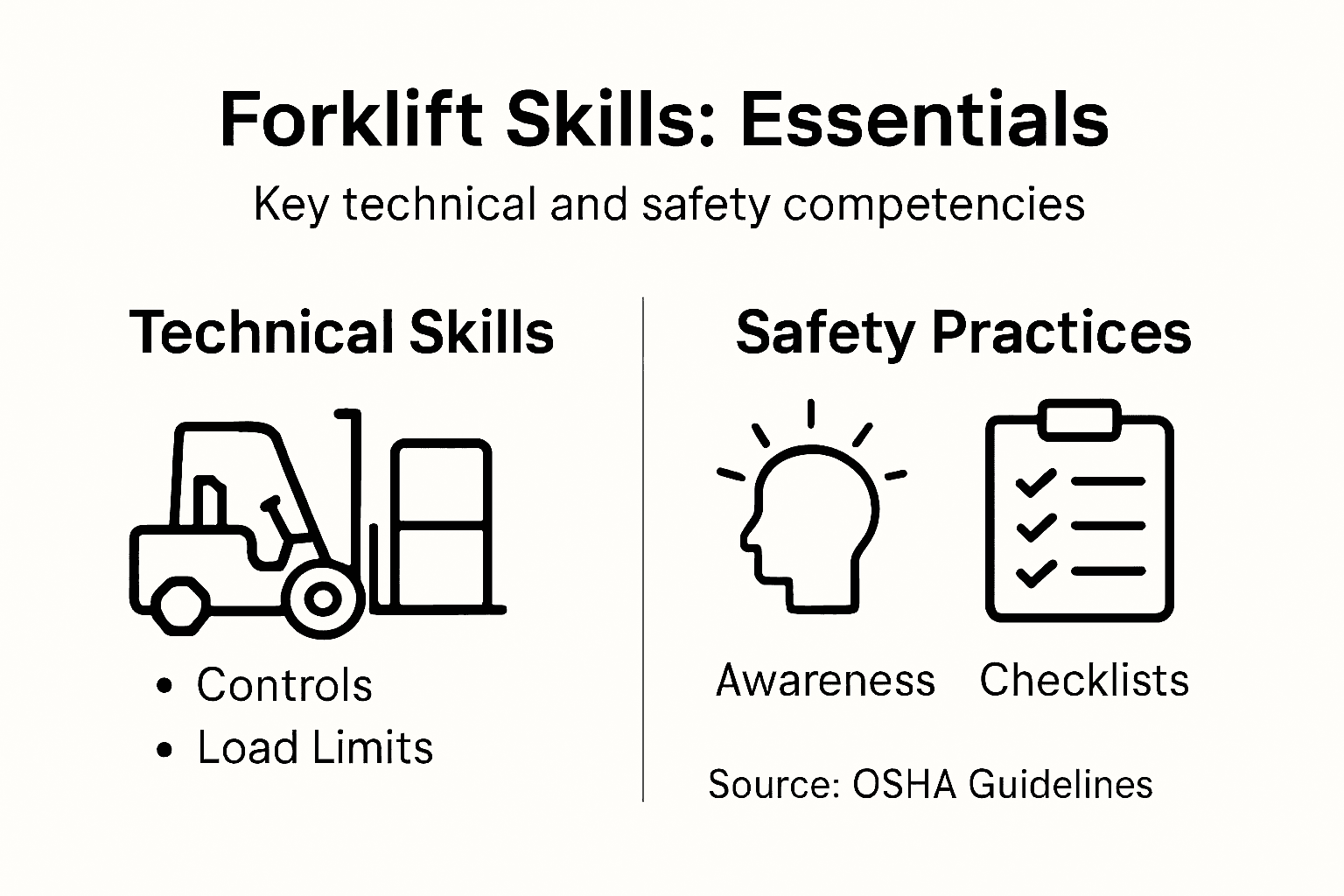
Forklift operator skills represent a complex set of technical and safety-focused competencies far beyond basic vehicle operation. Operator proficiency requires mastering multiple interconnected abilities that ensure workplace safety and equipment effectiveness. These skills go well beyond simply driving a powered industrial truck and demand comprehensive training and continuous skill development.
Operators must develop a sophisticated understanding of multiple critical domains, including:
- Vehicle mechanical controls
- Load dynamics and weight distribution
- Workplace environmental awareness
- Safety protocols and emergency procedures
- Equipment inspection and maintenance techniques
Contrary to popular misconceptions, forklift operation is not a simple task that can be learned casually. Formal training programs emphasize the intricate nature of professional forklift operation, which involves understanding complex instrumentation, load handling techniques, and potential workplace hazards.
Skilled forklift operators must comprehend vehicle-specific characteristics like load capacity, stability parameters, precise control locations, and how environmental factors impact safe operation. This requires not just initial training, but ongoing evaluation and skill refinement. Workplace conditions such as surface variations, pedestrian traffic patterns, and potential hazardous zones demand constant situational awareness and adaptive decision-making.
Pro tip: Treat forklift operation as a professional skill requiring continuous learning and never assume previous experience automatically translates to current workplace requirements.
Certification Requirements and OSHA Regulations
Forklift operator certification is a critical safety requirement mandated by the Occupational Safety and Health Administration (OSHA) under strict regulatory guidelines. Certification standards represent a comprehensive approach to ensuring workplace safety through rigorous training and evaluation protocols.
The OSHA regulation 29 CFR 1910.178 outlines specific requirements for forklift operator certification, which include:
- Formal classroom instruction on forklift operation
- Practical hands-on training with actual equipment
- Performance evaluation demonstrating operational competence
- Documentation of training and individual operator qualifications
- Mandatory recertification every three years
Employers bear the primary responsibility for ensuring comprehensive operator training. This means not just providing initial certification, but maintaining ongoing assessment of operator skills and workplace safety practices. The certification process is not about obtaining a government-issued license, but about systematically demonstrating competence in specific working environments and with particular types of equipment.
Workplace conditions and equipment variations demand that certification goes beyond a one-time training event. Operators must be re-evaluated periodically, especially after incidents, equipment changes, or when unsafe operating behaviors are observed. The goal is continuous improvement and proactive safety management, not merely checking a compliance box.
Pro tip: Treat forklift certification as an evolving process of skill development, not a static credential that remains valid regardless of changing workplace dynamics.
Core Technical and Safety Competencies
Forklift operators must master a complex set of technical and safety competencies that go far beyond simple machine operation. Comprehensive operator skills encompass both intricate mechanical knowledge and advanced situational awareness, creating a holistic approach to workplace safety.
The core technical competencies include:
- Detailed understanding of manufacturer operating instructions
- Precise vehicle control mechanisms
- Load stability and weight distribution principles
- Equipment inspection and maintenance protocols
- Advanced maneuverability techniques
- Understanding operational instrumentation and controls
Safety competencies represent an equally critical dimension of forklift operation. Operators must develop heightened environmental awareness that extends well beyond basic driving skills. This includes navigating complex workplace scenarios such as narrow aisles, managing pedestrian traffic, identifying potential hazard zones, and understanding unique surface conditions that could compromise operational safety.
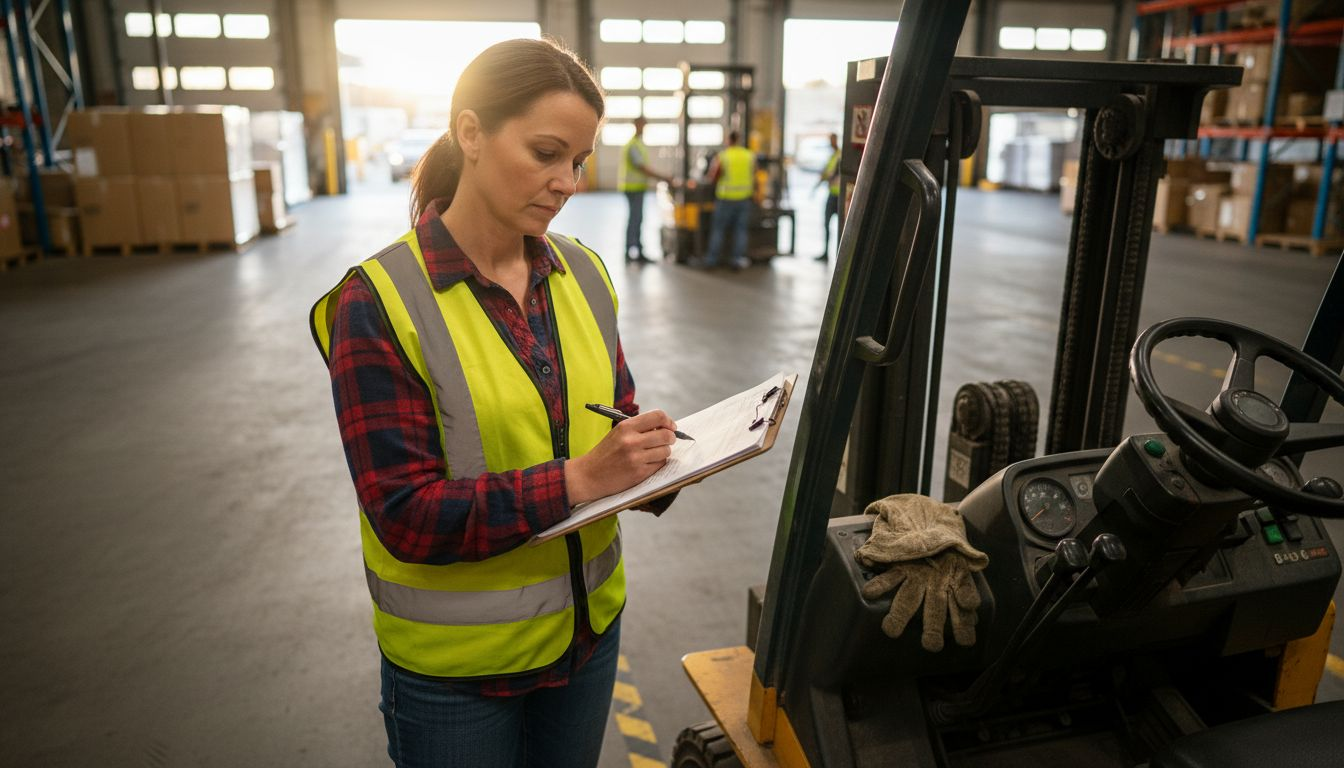
Professional forklift operation demands a seamless integration of technical precision and safety consciousness. Operators must simultaneously manage machine-specific technical requirements while maintaining constant situational awareness. This requires not just initial training, but continuous skill refinement and a proactive approach to identifying and mitigating potential workplace risks.
The table below summarizes how technical and safety competencies interact to create a well-rounded forklift operator.
| Competency Area | Primary Focus | Business Impact |
|---|---|---|
| Technical Skills | Operating controls and equipment | Prevents mechanical breakdowns |
| Safety Awareness | Hazard identification and avoidance | Reduces workplace injuries |
| Situational Adaptation | Adjusting to environment and workflow | Increases operational efficiency |
| Ongoing Training | Regular evaluation and skill updates | Ensures compliance and readiness |
Pro tip: Approach forklift operation as a dynamic skill set that requires constant learning and situational adaptation, not a static set of mechanical procedures.
Real-World Scenarios and Skill Applications
Forklift operation demands more than theoretical knowledge; it requires adaptive real-world skills that can respond to complex and unpredictable workplace environments. Practical skill application transforms classroom learning into critical workplace competence by challenging operators to navigate intricate and dynamic scenarios.
Real-world scenarios that test operator skills include:
- Navigating extremely confined warehouse spaces
- Handling unstable or oversized loads with precision
- Operating on challenging surfaces like ramps or uneven floors
- Managing high-traffic areas with pedestrian movement
- Adapting to rapidly changing workplace conditions
- Maintaining load stability during complex maneuvers
Successful operators must develop a heightened sense of situational awareness that goes beyond mechanical operation. This means constantly scanning the environment, anticipating potential hazards, and making split-second decisions that prioritize safety. Every movement requires a calculated approach that balances efficiency with risk management, considering factors like load weight, surface conditions, and surrounding personnel.
Training programs increasingly use sophisticated simulation techniques to prepare operators for these challenging scenarios. By recreating complex workplace environments, these programs help operators develop muscle memory, decision-making skills, and the confidence needed to handle unexpected challenges. The goal is not just compliance, but creating intuitive operators who can seamlessly adapt to any workplace scenario.
Pro tip: Always approach forklift operation as a continuous learning experience, treating each shift as an opportunity to refine your skills and situational awareness.
Common Training Gaps and Risk Factors
Forklift operator training is far more complex than simply teaching mechanical skills. Training deficiencies can create significant workplace safety vulnerabilities that extend beyond individual operator performance, potentially compromising entire organizational safety protocols.
Key training gaps and associated risk factors include:
- Insufficient hands-on practical training
- Lack of site-specific safety instruction
- Irregular skill evaluation and reassessment
- Inadequate understanding of equipment operational limits
- Poor hazard recognition capabilities
- Minimal emphasis on environmental awareness
Operator complacency represents a critical underlying risk factor that frequently emerges from inadequate training programs. When operators become overconfident or fail to maintain heightened situational awareness, the likelihood of accidents increases dramatically. This psychological dimension of risk management goes beyond technical skills, requiring comprehensive training that addresses both mechanical competence and mental preparedness.
Addressing these training gaps demands a multifaceted approach that combines rigorous initial training, periodic skill assessments, and adaptive learning techniques. Organizations must develop dynamic training programs that evolve with changing workplace conditions, technological advancements, and emerging safety standards. The goal is not merely compliance, but creating a culture of continuous safety improvement and proactive risk management.
The following table highlights common training gaps and outlines potential risks if not addressed.
| Training Gap | Risk Outcome | Preventive Solution |
|---|---|---|
| Insufficient hands-on practice | Increased accident likelihood | Implement more practical exercises |
| Infrequent skills reassessment | Skills become outdated | Schedule regular evaluations |
| Poor hazard recognition | Overlooked workplace dangers | Focus on real-world simulations |
| Minimal site-specific training | Unsafe responses in new areas | Customize instruction by location |
Pro tip: Treat forklift operator training as an ongoing process of skill refinement, not a one-time certification event.
Master Forklift Operator Skills with Confidence and OSHA Compliance
The challenges of mastering forklift operator skills go far beyond basic driving. This article highlights the need to develop deep technical knowledge, safety awareness, and ongoing skill refinement to prevent workplace accidents and meet OSHA standards. If you want to overcome training gaps, boost your situational awareness, and ensure thorough OSHA certification that truly prepares you for real-world scenarios, specialized training matters.
Start building professional proficiency today with Forkliftacademy.com’s comprehensive OSHA-compliant training programs. Whether you seek individual certification or business-wide onsite solutions, our courses cover all critical safety and technical competencies discussed in the article. Explore expert resources in our Forklift Safety Archives and accelerate your qualifications in the Forklift License Archives. Don’t wait to enhance your safety skills and meet regulatory requirements. Visit Forkliftacademy.com now and take the next step toward safer, more confident forklift operation.
Frequently Asked Questions
What skills are required for a forklift operator?
Forklift operators must master technical skills such as understanding vehicle controls, load dynamics, and equipment maintenance. Additionally, safety competencies like hazard identification, situational awareness, and emergency procedures are crucial.
What are the certification requirements for forklift operators under OSHA?
OSHA requires forklift operators to undergo formal classroom instruction, practical hands-on training, a performance evaluation, and periodic recertification every three years to ensure ongoing competence and safety.
How does ongoing training impact forklift operator safety?
Ongoing training is vital for maintaining and improving operator skills, keeping them informed about new equipment, changing workplace conditions, and safety protocols, thus reducing the risk of accidents.
What are common training gaps that can lead to forklift accidents?
Common training gaps include insufficient hands-on practice, lack of site-specific safety instruction, and irregular skill assessments. Addressing these gaps is essential for preventing accidents and ensuring operator proficiency.
Recommended
- What a Forklift Course Covers—OSHA Compliance and Safety – Top Osha Forklift Certification
- Complete Guide to OSHA Compliance for Forklift Safety – Top Osha Forklift Certification
- 7 Essential Forklift Operator Skills for Safety and Success – Top Osha Forklift Certification
- 7 Essential Forklift Training Tips for Safe Operation – Top Osha Forklift Certification