
Nearly one in five serious warehouse injuries in American workplaces involve aerial lift equipment. For every warehouse manager aiming to keep teams safe and productive, proper scissor lift training is not just a box to check—it is the backbone of compliance and efficiency. Understanding the steps to inspect, assess, operate, and secure equipment can reduce risks and create a smoother workflow for everyone on your team.
Table of Contents
- Step 1: Inspect The Scissor Lift And Worksite
- Step 2: Review Operator Credentials And Procedures
- Step 3: Set Up The Lift For Safe Operation
- Step 4: Operate The Scissor Lift Efficiently
- Step 5: Verify Work Completion And Secure The Lift
Quick Summary
| Key Takeaway | Explanation |
|---|---|
| 1. Conduct thorough inspections | Inspect the scissor lift and worksite for safety issues, ensuring equipment functionality and hazard awareness. |
| 2. Verify operator qualifications | Confirm that operators have current certifications and skills necessary for safe equipment operation. |
| 3. Secure the lift before operation | Set up the lift on stable ground and establish a safety perimeter to minimize risks during use. |
| 4. Maintain situational awareness | Stay alert to the environment and communicate clearly with ground personnel while operating the lift. |
| 5. Perform comprehensive shutdown | Follow a checklist to secure the lift, documenting any issues and ensuring the workspace is safe. |
Step 1: Inspect the scissor lift and worksite
Before operating a scissor lift, conducting a comprehensive safety inspection is your first and most critical responsibility. A thorough pre use examination helps prevent workplace accidents and ensures the equipment functions correctly in the designated environment.
Start by performing a detailed equipment and worksite safety check. Methodically walk around the scissor lift examining its structural integrity. Inspect guardrails to confirm they are secure and undamaged. Check tires for proper inflation and signs of wear. Verify that all hydraulic systems operate smoothly without leaks. Test control mechanisms including emergency stop buttons and platform controls to guarantee responsive functionality.
Carefully evaluate the worksite for potential hazards such as uneven ground, overhead obstructions, electrical lines, debris, or unstable surfaces that could compromise safe lift operation. Confirm adequate clearance around the equipment and remove any objects that might interfere with movement. Your systematic inspection process protects not just yourself but everyone working in the surrounding area.
Pro tip: Always document your pre use inspection findings and immediately report any equipment concerns to your supervisor before attempting operation.
Here’s a quick summary of key scissor lift pre-operation inspection areas and their purpose:
| Inspection Area | What to Check | Safety Impact |
|---|---|---|
| Guardrails | Secure and undamaged | Prevent falls and injuries |
| Tires | Proper inflation, no excessive wear | Ensure stable equipment movement |
| Hydraulic Systems | No leaks, smooth operation | Maintain lift reliability |
| Controls (incl. Emergency Stop) | Responsive and intact | Allow immediate shutdown in crisis |
| Worksite Hazards | Remove debris, avoid obstructions | Reduce accident risk |
Step 2: Review operator credentials and procedures
Before any scissor lift can be operated, verifying the operator’s qualifications and understanding of safety protocols is absolutely essential. This critical step ensures that only trained and competent personnel will be handling potentially dangerous equipment.
Carefully review each operator’s training certification and documentation. Confirm that their training meets current OSHA standards and includes comprehensive instruction on equipment operation, hazard recognition, and emergency response procedures. Each operator must demonstrate a complete understanding of manufacturer guidelines, material handling limits, and specific site safety requirements. Check that certifications are current and that operators have received recertification training within the past three years.
Evaluate the operator’s practical skills through supervised performance assessments. Observe their ability to conduct pre use inspections, understand control mechanisms, and respond appropriately to potential workplace hazards. Verify that they can confidently maneuver the scissor lift, understand weight restrictions, and recognize potential risks in the working environment.
Pro tip: Create a standardized skills assessment checklist to consistently evaluate operator competency and maintain a detailed record of each worker’s training history.
Compare operator qualification elements and their significance:
| Qualification Type | Importance | Verification Method |
|---|---|---|
| OSHA Training Certification | Legal compliance | Review documents |
| Manufacturer Guidelines | Equipment-specific safety | Direct assessment |
| Recertification Status | Current skills confirmed | Check training history |
| Practical Skills | Safe lift operation | Supervised evaluation |
Step 3: Set up the lift for safe operation
Preparing a scissor lift for operation requires meticulous attention to detail and a systematic approach to workplace safety. Your goal is to create a secure environment that minimizes potential risks and ensures optimal equipment performance.
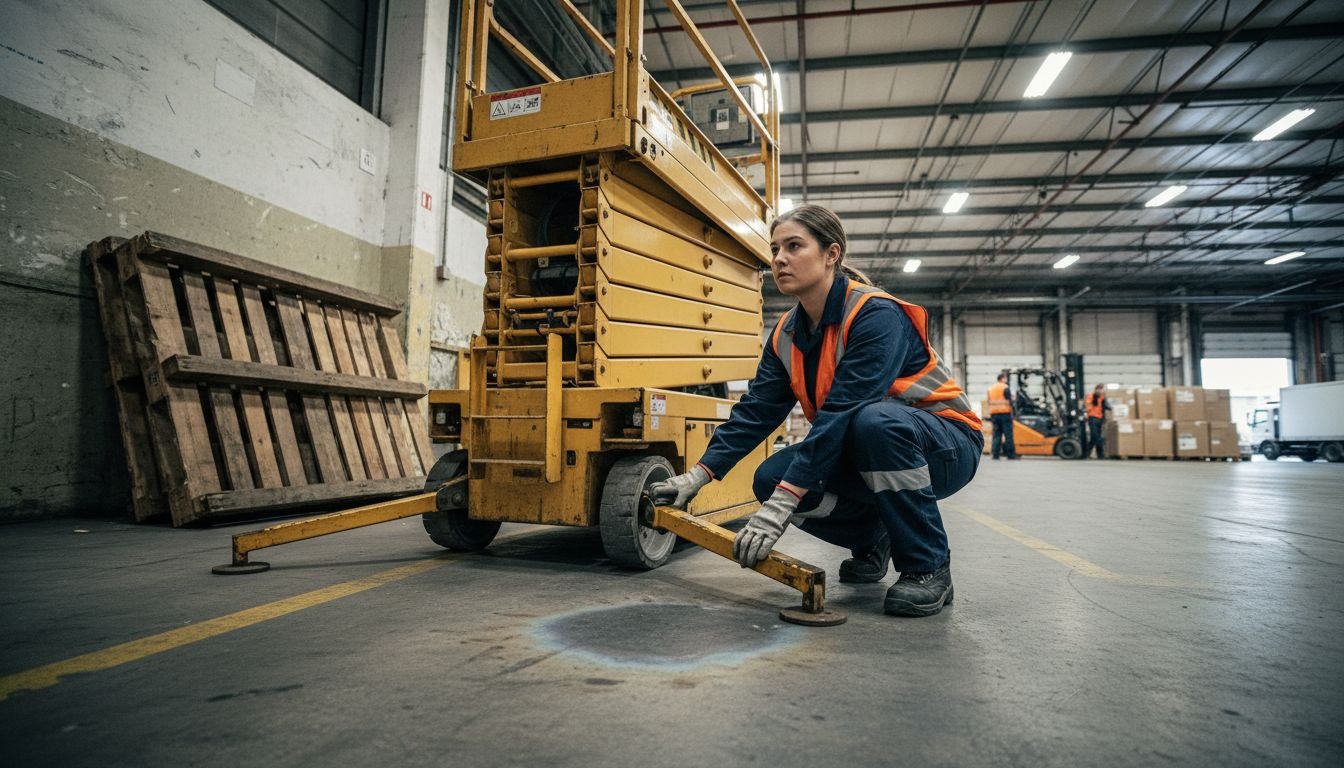
Begin by carefully evaluating the terrain where you will position the lift. Verify level ground conditions and ensure the surface can support the equipment’s total weight. If the ground appears uneven or unstable, use appropriate stabilization methods such as heavy duty mats or additional support platforms. Deploy outriggers fully if your specific scissor lift model requires them, making certain they are extended symmetrically and locked into place. Establish a clear safety perimeter by using barricades or warning markers to prevent unauthorized personnel from entering the work zone.
Conduct a comprehensive pre operational assessment of overhead clearances, electrical line proximity, and potential environmental hazards. Check that all guardrails are securely fastened, safety interlocks are functioning correctly, and personal protective equipment is readily accessible. Confirm the lift’s load capacity matches your specific work requirements and that all control mechanisms respond smoothly and predictably.
Pro tip: Always perform a full test cycle of lift controls and movement mechanisms before beginning actual work to identify any potential operational issues.
Step 4: Operate the scissor lift efficiently
Successful scissor lift operation requires precision, focus, and an unwavering commitment to safety protocols. Your ability to navigate the equipment smoothly and confidently will determine the effectiveness of your work and the protection of everyone in the surrounding area.
Master the equipment controls with deliberate and calculated movements. Understand precise platform control techniques using the joystick for smooth directional changes. Maintain constant awareness of your platform’s position and movement speed. Keep the platform level at all times and avoid sudden jerky motions that could destabilize the lift. Travel at conservative speeds particularly when navigating uneven surfaces or making directional transitions. Coordinate closely with ground personnel and use clear hand signals or communication devices to ensure everyone understands your intended movements.
Pay exceptional attention to your immediate work environment. Continuously scan for potential obstacles overhead electrical lines ground debris or other equipment. Maintain a consistent distance from potential hazards and never attempt to move the scissor lift while personnel are on the platform. Always keep your body balanced and centered within the platform boundaries and avoid leaning or reaching beyond the guardrails. Your situational awareness is your most critical safety tool.
Pro tip: Practice controlled movements in a safe training environment before performing actual work tasks to build muscle memory and confidence.
Step 5: Verify work completion and secure the lift
As your work tasks conclude, systematically shutting down and securing the scissor lift becomes your primary responsibility. This final phase of operation ensures equipment safety and prepares the workspace for future use.
Perform a comprehensive work site shutdown by first confirming all assigned tasks are fully completed. Lower the platform completely to ground level with smooth and controlled movements. Engage the emergency stop buttons and turn off all control mechanisms. Remove keys from the ignition to prevent unauthorized access and potential misuse. Carefully collect and store all tools and equipment from the platform ensuring no items are left behind that could create future hazards.
Conduct a final inspection of the scissor lift examining the equipment for any signs of damage wear or operational irregularities. Check tire conditions hydraulic systems and structural components. Document any observed issues or maintenance requirements and report them to your supervisor immediately. Clean the platform and surrounding area removing debris dust or potential contaminants. By thoroughly securing the equipment you contribute to workplace safety and equipment longevity.
Pro tip: Create a standard end of shift checklist to ensure consistent and comprehensive equipment shutdown procedures.
Enhance Your Scissor Lift Safety with Certified Training
Operating a scissor lift safely requires a clear understanding of detailed workflows like pre operation inspections, operator qualifications, and proper equipment handling. This article highlights how neglecting these critical steps can lead to workplace hazards and compliance challenges. If your goal is to master OSHA safety compliance and minimize risks on the job site, receiving thorough, standardized training is essential.
At Forkliftacademy.com, we provide specialized Forklift Certification Archives and Forklift Safety Archives to equip operators with both the knowledge and hands-on skills necessary for safe and efficient scissor lift operation. Our courses are designed to help you confidently perform safety inspections, understand regulatory requirements, and operate lifts in a way that protects both personnel and equipment.
Start your journey toward safer work environments today. Achieve recognized qualifications that comply with OSHA standards by exploring our programs at Forkliftacademy.com. Don’t wait until a safety issue arises. Train now to operate lifts with confidence and keep your workplace incident-free.
Frequently Asked Questions
What are the key steps in the Scissor Lift Operator workflow for safety compliance?
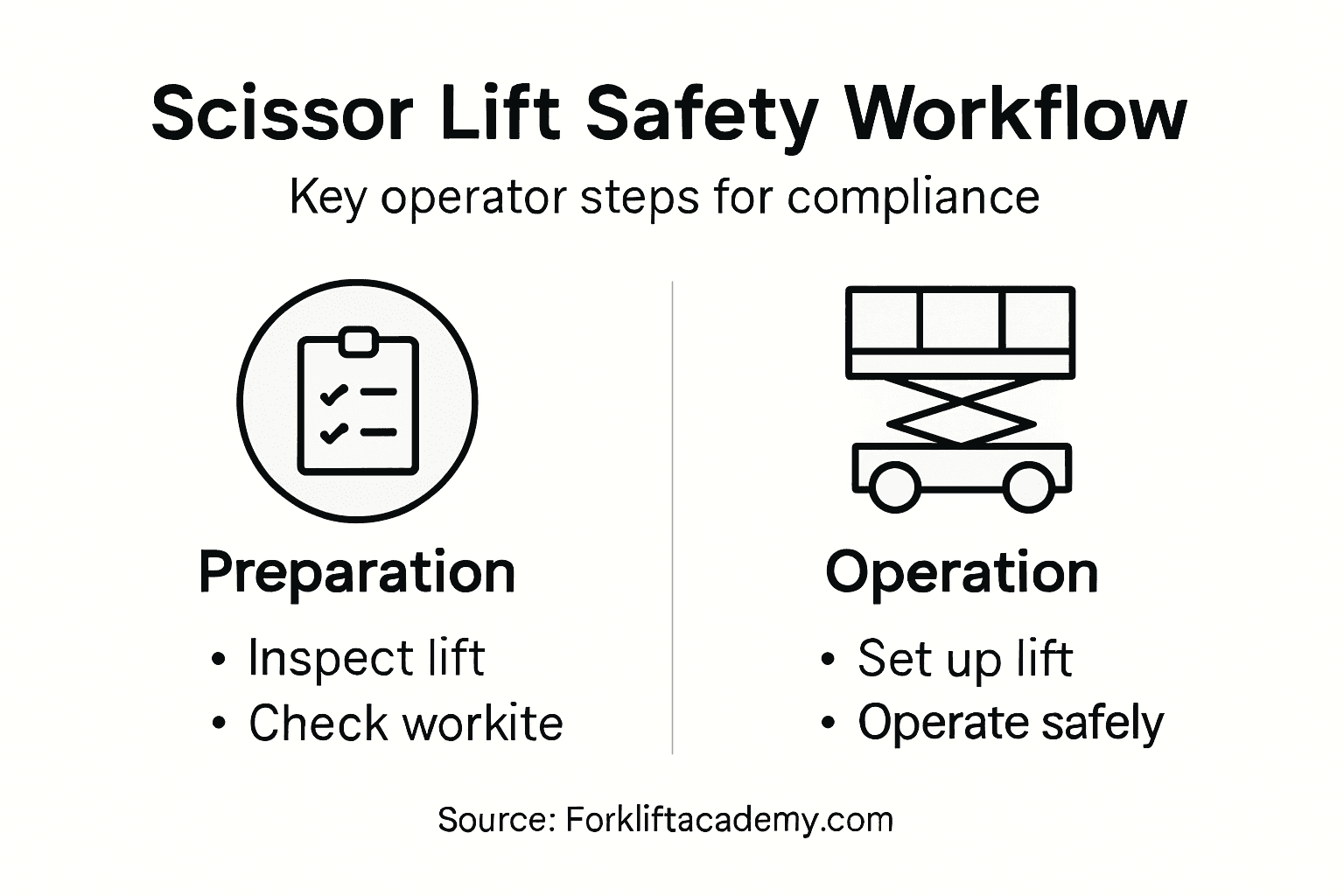
To ensure safety compliance while operating a scissor lift, follow these key steps: inspect the equipment and worksite, verify operator credentials and procedures, set up the lift for safe operation, operate the lift efficiently, and verify work completion before securing the lift. Start with a detailed safety inspection and create a checklist for each step to maintain accountability.
How do I conduct a proper inspection of the scissor lift and the worksite?
Begin by checking the structural integrity of the scissor lift, including guardrails, tires, and hydraulic systems. Also, evaluate the worksite for hazards like uneven ground and overhead obstructions, taking action to eliminate any risks before operation.
What qualifications should a Scissor Lift Operator have?
A Scissor Lift Operator should possess current OSHA training and certification, demonstrating understanding of equipment safety and operational protocols. Ensure to verify their practical skills through supervised assessments to guarantee confidence in utilizing the equipment safely.
What actions should I take before beginning to operate the scissor lift?
Before operating, confirm the lift is set up on level ground and all safety measures are addressed, including functionality testing of controls and the setup of safety barriers. Create a safe perimeter and engage in a test of the lift’s controls to ensure responsiveness before starting any work.
How can I ensure work site safety while operating the scissor lift?
Maintain constant awareness of your environment by monitoring overhead lines and debris while operating. Use smooth and controlled movements, communicating clearly with ground personnel to avoid accidents and ensure a safe working environment for everyone involved.
What should I do after completing work with the scissor lift?
After finishing tasks, lower the platform completely, engage emergency stops, and secure all tools and equipment. Conduct a final inspection of the lift for damage, document any issues, and clean the area to maintain safety for future operations.
Recommended
- Understanding Scissor Lift Operator Responsibilities – Top Osha Forklift Certification
- Essential Scissor Lift Training Steps for Safe Operations – Top Osha Forklift Certification
- Complete Guide to the Role of a Scissor Lift Operator – Top Osha Forklift Certification
- 7 Key Steps in a Scissor Lift Training Checklist for Safety – Top Osha Forklift Certification