


Over eight thousand forklift-related injuries occur each year in American warehouses, putting both workers and businesses at risk. For warehouse managers and logistics supervisors, staying on top of OSHA-compliant forklift certification renewal is not just a legal duty, but a critical part of preserving workplace safety. This guide explains how structured renewal programs and precise documentation can protect your team, satisfy inspectors, and support a culture of proactive safety in any American facility.
| Point | Details |
|---|---|
| Forklift Certification Renewal is Essential | Operators must be recertified every three years to ensure ongoing competency and safety compliance. |
| Comprehensive Training Programs are Key | Employers are required to develop thorough training programs that include formal instruction and practical evaluations. |
| Meticulous Documentation is Critical | Keeping detailed records of training and evaluations is necessary for OSHA compliance and to prevent legal liabilities. |
| Expired Certifications Carry Risks | Allowing operators with expired certifications can lead to severe financial and legal consequences for businesses. |
Forklift certification renewal is a critical process for maintaining workplace safety and meeting OSHA compliance standards. Employers must understand that certification is not a one-time event, but an ongoing commitment to operator training and workplace safety. According to OSHA regulations, forklift operators are required to be evaluated and recertified at least once every three years to demonstrate their continued competency and safe operational skills.
The certification renewal process involves multiple comprehensive components that go beyond simple retraining. Operators must complete a structured program that includes formal classroom instruction, practical hands-on training, and a formal evaluation of their skills. This process ensures that operators remain current with the latest safety protocols, equipment technologies, and workplace-specific hazards. Key requirements typically include demonstrating proficiency in equipment operation, understanding safety procedures, conducting proper equipment inspections, and navigating workplace-specific risks.
Under OSHA guidelines, employers are responsible for developing and implementing robust training programs that thoroughly assess an operator’s capabilities. This means more than just reviewing existing skills – it involves a comprehensive assessment that may include written examinations, practical performance tests, and documentation of the operator’s competence. Certification programs must cover critical areas such as equipment maintenance, safe operational techniques, load handling, and understanding specific workplace environmental challenges.
Pro tip: Document every step of your forklift certification renewal process meticulously, maintaining detailed records of training, evaluations, and individual operator performance to ensure full OSHA compliance and workplace safety.
The forklift certification renewal process requires a systematic approach to documentation and training requirements. Warehouse managers and logistics supervisors must understand that renewal is not merely a bureaucratic exercise, but a critical safety protocol that ensures operator competency and workplace protection. OSHA mandates a comprehensive renewal strategy that goes beyond simple paperwork, demanding rigorous training and thorough skill assessment.
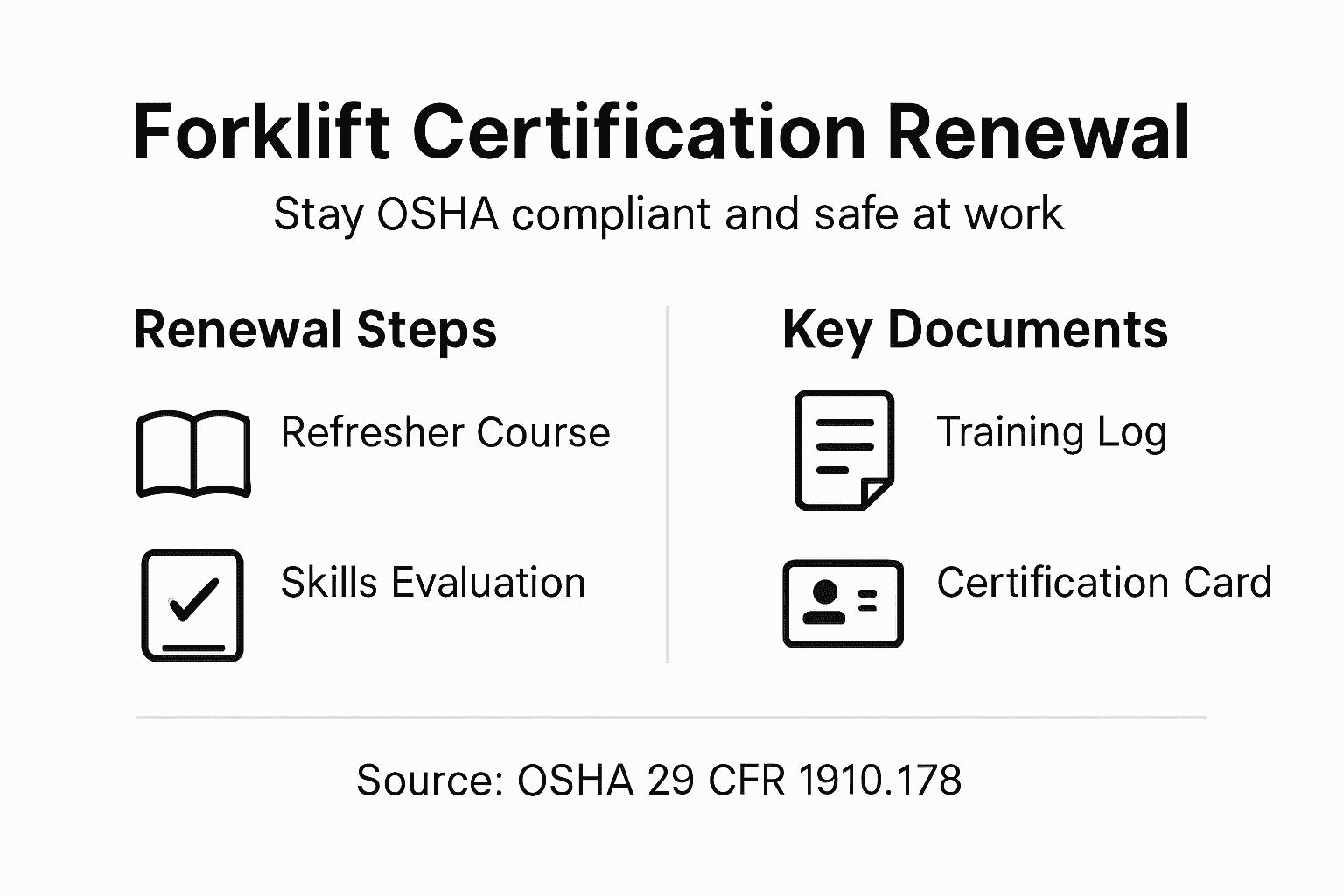
Typically, the renewal process involves an eight-hour refresher training program that comprehensively covers multiple critical areas. Operators must participate in detailed sessions addressing forklift design, control mechanisms, safety protocols, and equipment stability. The training is not passive – participants must demonstrate active engagement and pass both theoretical and practical evaluations. Key documentation requirements include maintaining detailed records that capture training completion dates, evaluation outcomes, and specific details about the instructors who conducted the certification process.
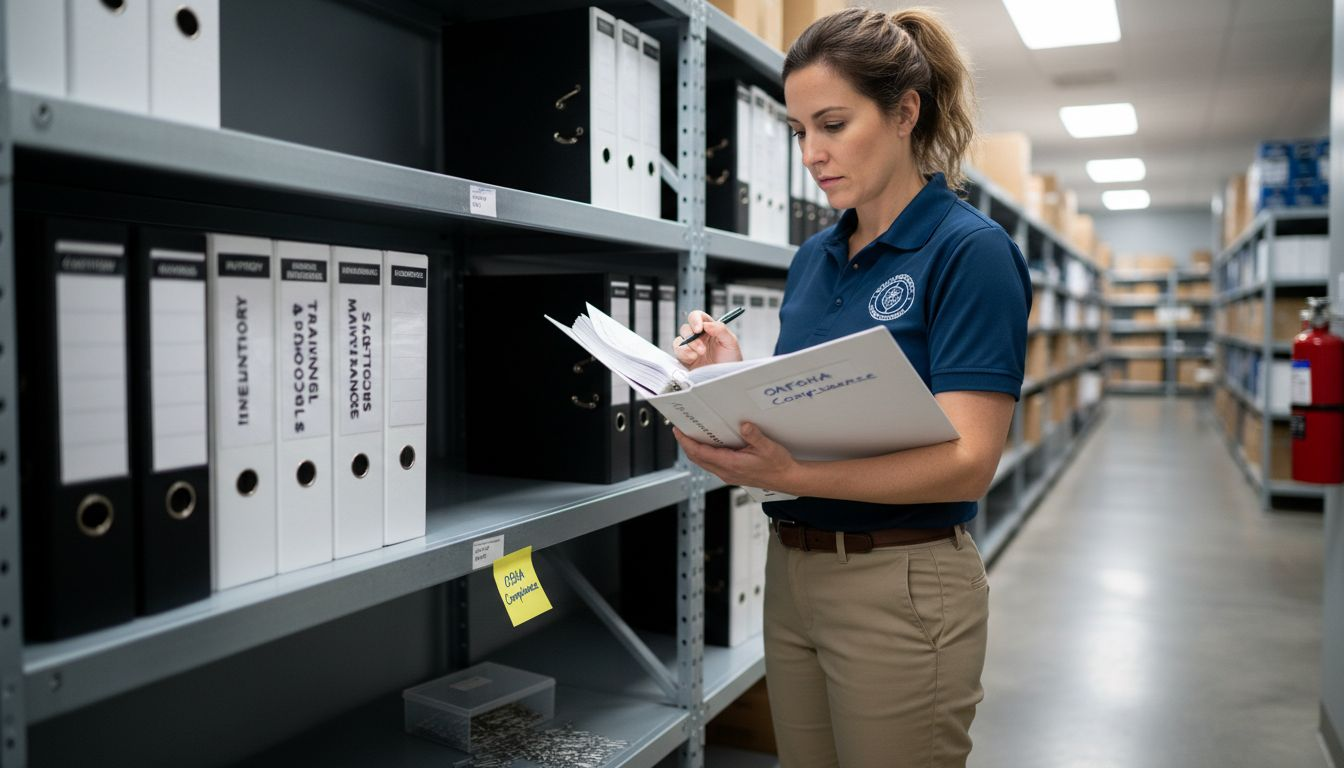
Employers bear significant responsibility in the renewal documentation process. They must maintain meticulous records that can withstand potential OSHA compliance audits. This involves creating and preserving comprehensive training logs that include individual operator performance assessments, dates of certification, specific training modules completed, and evidence of practical skill evaluations. Critical documentation elements include valid operator identification, detailed training records, evaluation results, and certification status verification. These documents serve not just as administrative requirements but as critical evidence of an organization’s commitment to workplace safety.
Key documentation steps and their compliance advantages:
| Documentation Step | What It Involves | Compliance Benefit |
|---|---|---|
| Training Date Records | Log when each session occurs | Verifies renewal intervals |
| Instructor Details | Identify trainer credentials | Demonstrates qualified oversight |
| Evaluation Outcomes | Report practical test results | Proves operator competency |
| Certification Status | Record current validity | Provides audit-ready evidence |
Pro tip: Develop a digital tracking system for forklift certification records that allows instant retrieval of training histories, ensuring you can quickly demonstrate compliance during unexpected workplace inspections.
Employers face significant legal responsibilities when managing forklift operations, as outlined in OSHA standard 29 CFR 1910.178. This comprehensive regulation mandates that businesses develop and implement robust training programs that go far beyond simple documentation. The legal framework requires employers to ensure every forklift operator is thoroughly trained, certified, and continuously evaluated to maintain workplace safety standards.
The core legal obligations include establishing a comprehensive training program that addresses multiple critical dimensions of forklift operation. Employers must provide detailed instruction covering safe operation principles, specific vehicle types, and unique workplace hazards. This training must be more than a one-time event – OSHA requires regular re-evaluation of operators, mandating refresher training at least every three years or immediately when unsafe behaviors are observed. The law places direct responsibility on employers to maintain meticulous records documenting each operator’s training history, evaluation outcomes, and certification status.
Beyond specific training requirements, employers are bound by the General Duty Clause of the Occupational Safety and Health Act, which compels businesses to provide a workplace free from recognized hazards. For forklift operations, this means implementing systematic safety protocols that proactively prevent accidents. Legal compliance involves not just training, but creating a culture of safety that includes regular equipment inspections, continuous operator skill assessments, and immediate corrective actions when potential risks are identified. Failure to meet these standards can result in significant financial penalties, potential legal liability, and most critically, increased risk of workplace injuries.
Pro tip: Develop a comprehensive digital compliance tracking system that automatically flags upcoming certification expirations and documents all training interactions to demonstrate proactive safety management.
Forklift operators with expired certifications pose significant workplace risks that extend far beyond simple regulatory noncompliance. When certification lapses, employers open themselves to potential legal nightmares involving substantial financial penalties, increased accident likelihood, and potential lawsuits that can devastate business operations. The legal implications of allowing uncertified operators to handle industrial equipment are severe and multifaceted.
The financial consequences of expired certifications can be catastrophic. An untrained or uncertified forklift operator dramatically increases the probability of workplace accidents, which can result in serious injuries, equipment damage, and potential worker compensation claims. Insurance providers often have strict requirements about operator certification, meaning that accidents involving improperly certified operators might result in denied claims. This creates a compounded financial risk where businesses could be responsible for medical expenses, equipment replacement, legal fees, and potential regulatory fines simultaneously.
Beyond direct financial risks, expired certifications create substantial legal vulnerabilities. OSHA mandates comprehensive training and ongoing certification as a fundamental workplace safety requirement. Businesses that fail to maintain current operator certifications can face significant enforcement actions, including substantial monetary penalties, mandatory corrective actions, and potential operational shutdowns. Moreover, in the event of a serious accident, expired certifications could be viewed as gross negligence, potentially exposing company leadership to personal legal liability and criminal charges in extreme cases of workplace safety violations.
Pro tip: Implement an automated certification tracking system that sends renewal reminders 90 days before expiration and automatically suspends operator permissions when certifications lapse.
Forklift certification renewal represents a strategic investment for businesses, with cost-effective training options ranging between $90 and $300 per course. These programs typically require just one day of training while providing OSHA-compliant certification valid for three full years. Smart organizations recognize that the modest investment in renewal far outweighs potential accident-related expenses, legal risks, and operational disruptions associated with noncompliance.
Businesses have multiple renewal pathways designed to minimize operational disruption. Modern certification programs offer flexible learning models, including online e-learning courses combined with practical hands-on assessments. These modular approaches allow companies to train current employees efficiently without extensive downtime. By selecting strategically designed certification programs, organizations can simultaneously enhance workforce skills, maintain regulatory compliance, and control training expenditures. The most effective renewal strategies incorporate comprehensive training that addresses both theoretical knowledge and practical skill demonstration.
The financial calculus of forklift certification renewal extends beyond direct training costs. Proactive certification maintenance helps businesses reduce worker compensation claims, lower insurance premiums, and minimize potential legal liabilities. Investing in consistent workforce training creates a safety-conscious culture that can significantly decrease accident rates and associated financial risks. Companies that view certification renewal as a critical operational expense rather than an optional expenditure consistently demonstrate better safety performance and long-term cost management.
Here’s a comparison of renewal training formats and their business impact:
| Training Format | Time Commitment | Operational Impact | Long-Term Benefit |
|---|---|---|---|
| Classroom Only | 8 hours | Staff off-site for a day | Ensures thorough knowledge |
| Online + Practical | 4-6 hours | Minimal downtime | Flexible scheduling, efficiency |
| On-Site Workshops | 1 business day | No travel needed | Customizes for specific risks |
Pro tip: Negotiate bulk training rates with certification providers and schedule renewals strategically to distribute costs across fiscal quarters while maintaining continuous workforce readiness.
Maintaining OSHA compliance and ensuring forklift operator safety require more than just knowledge of renewal timelines. The risk of expired certifications, legal liabilities, and workplace accidents call for reliable, comprehensive training solutions designed to meet all regulatory demands. If you want to eliminate downtime caused by uncertified operators and prevent costly penalties, addressing your forklift certification renewal effectively is critical.
Discover how Forkliftacademy.com can help you manage every stage of your renewal process with OSHA-compliant programs tailored for businesses and individuals. From online refresher courses to hands-on training at numerous physical locations across the United States and Canada, our offerings ensure your team meets the rigorous standards outlined in the Forklift Certification Archives – Top Osha Forklift Certification. Take control of your compliance today by exploring expert training options that keep your workforce safe and your operations running smoothly.
Explore our courses and business solutions now at Forkliftacademy.com and secure your compliance with confidence.
Forklift certification renewal requires operators to complete a structured program that includes classroom instruction, practical hands-on training, and evaluation of their skills at least once every three years, as mandated by OSHA.
OSHA regulations stipulate that forklift operators must be recertified at least once every three years to ensure they maintain their skills and understanding of safety protocols.
Employers must maintain detailed records that include training completion dates, evaluation outcomes, instructor credentials, and the current certification status of each operator to demonstrate compliance with OSHA standards.
Expired certifications can lead to significant workplace risks, including increased accident likelihood, financial penalties for noncompliance, potential lawsuits, and legal liability for both the operators and the employers.