
Over seventy percent of American workplace accidents involving industrial equipment are linked to improper operator training. For warehouse managers and forklift operators across the United States, keeping staff certified is more than a legal formality. Choosing the right OSHA-compliant training cards can reduce accident risks and strengthen regulatory compliance, offering clear proof of your team’s skill and safety every shift.
Table of Contents
- What Is A Forklift Training Card
- Types Of Forklift Certification Cards
- Osha Requirements And Legal Standards
- Training Process And Card Features
- Employer And Operator Responsibilities
- Validity, Renewal, And Compliance Risks
Key Takeaways
| Point | Details |
|---|---|
| Forklift Training Card Importance | It verifies skills and ensures compliance with OSHA standards, crucial for workplace safety. |
| Types of Certification Cards | Different cards validate specific skills based on equipment type and operational complexity. |
| OSHA Training Requirements | Rigorous training involving formal instruction, practical training, and performance evaluation is legally mandated. |
| Renewal and Compliance | Certification requires periodic renewal and performance assessments to avoid legal risks and ensure operational safety. |
What Is a Forklift Training Card
A forklift training card is an official documentation proving an operator’s legal authorization and competence to safely operate industrial lift equipment. These critical credentials serve as tangible evidence that a worker has completed comprehensive safety training and meets OSHA regulatory standards.
Typically, a forklift training card contains essential information including the operator’s name, certification date, specific equipment authorization, and the issuing organization’s details. This small but powerful document represents more than just paperwork – it demonstrates a worker’s verified skills and an employer’s commitment to workplace safety. Professional training cards validate that an individual understands critical operational protocols, machine mechanics, load management techniques, and potential workplace hazards.
The primary purpose of a forklift training card extends beyond mere documentation. It provides legal protection for both employers and employees by ensuring standardized safety training, reducing accident risks, and establishing clear accountability standards. Workers with valid certification cards prove they have undergone rigorous instruction covering topics like equipment inspection, proper lifting techniques, maneuvering in tight spaces, and understanding load capacity limitations.
Pro tip: Always keep your forklift training card current by tracking renewal dates and scheduling recertification before expiration to maintain continuous legal authorization and workplace compliance.
Types of Forklift Certification Cards
Forklift certification cards are not one-size-fits-all documents, but rather specialized credentials designed to validate an operator’s specific skills and equipment expertise. Organizations can obtain multiple types of certification cards tailored to different workplace requirements, equipment types, and operational contexts.
The primary categories of forklift certification cards typically include standard classifications based on equipment type and operational complexity. These might encompass warehouse forklift cards, rough terrain forklift cards, narrow aisle forklift cards, and specialized industrial equipment cards. Each certification verifies that an operator has received targeted training for a particular equipment type, understanding its unique handling characteristics, safety protocols, and operational challenges.
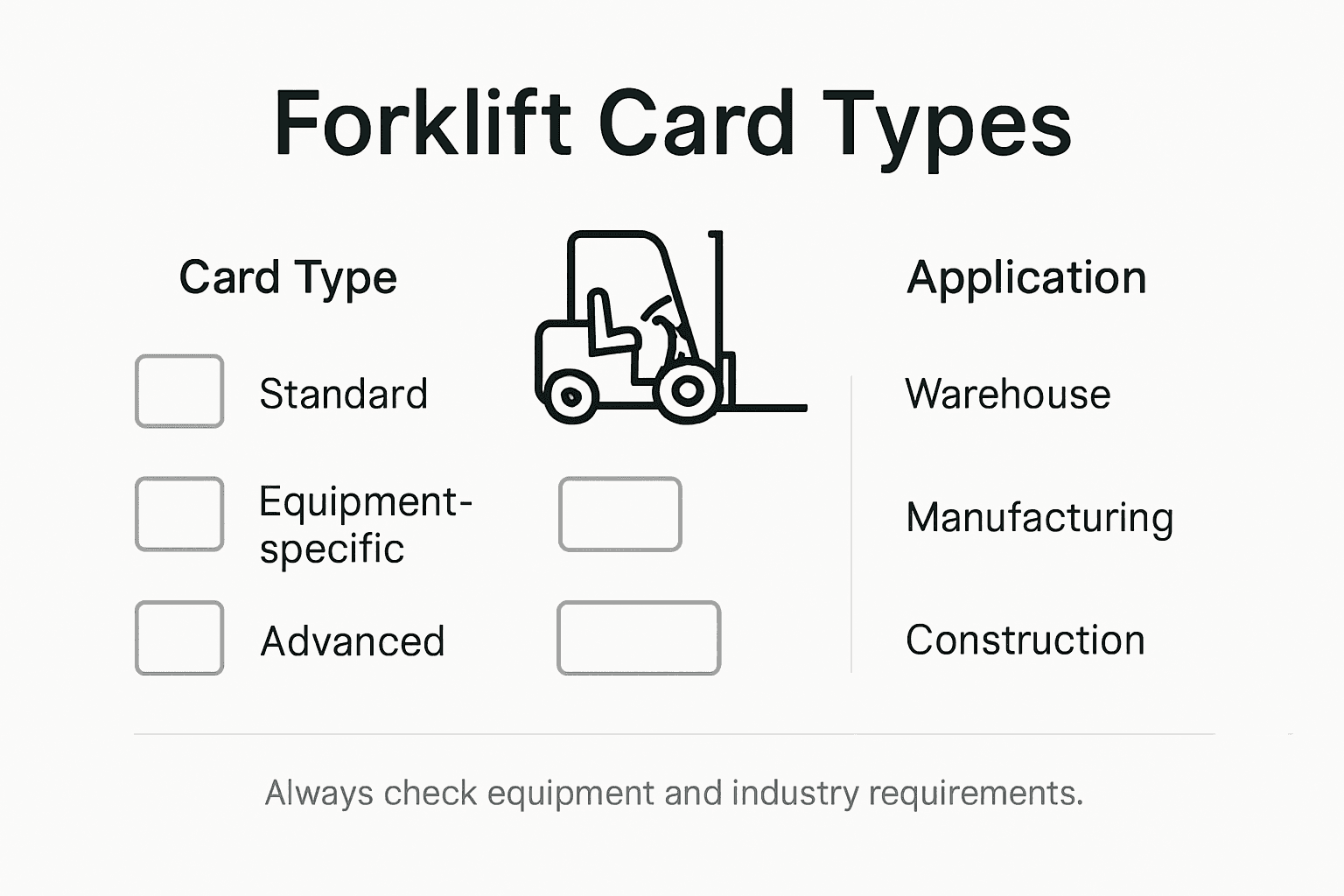
Beyond equipment-specific classifications, certification cards can also differentiate by skill level and training depth. Entry-level cards demonstrate basic operational competence, while advanced certifications indicate more extensive training, potentially including complex load management, advanced maneuvering techniques, and comprehensive safety protocol understanding. Some specialized cards might also cover unique environments like construction sites, shipping yards, or manufacturing facilities, reflecting the nuanced skill sets required in different industrial settings.
Here’s a comparison of the main types of forklift certification cards and their workplace relevance:
| Certification Type | Workplace Application | Training Focus |
|---|---|---|
| Warehouse Forklift Card | Warehouses, retail centers | Pallet handling, tight turns, stacking |
| Rough Terrain Forklift Card | Construction sites, outdoors | Uneven surfaces, large equipment loads |
| Narrow Aisle Forklift Card | Distribution centers | Precise maneuvering, narrow spaces |
| Specialized Equipment Card | Manufacturing, shipping yards | Custom controls, hazardous materials |
Pro tip: Always verify the specific certification requirements for your industry and equipment type, as certification needs can vary significantly across different workplace environments and operational contexts.
OSHA Requirements and Legal Standards
Under the Occupational Safety and Health Administration (OSHA) regulations, forklift operator certification is a critical legal requirement that goes far beyond simple paperwork. OSHA mandates comprehensive training programs that ensure workplace safety and operational competence for all industrial truck operators, with specific legal standards outlined in the Powered Industrial Trucks standard (29 CFR 1910.178).
The legal framework requires employers to implement a rigorous training process that includes three fundamental components: formal instruction, practical training, and performance evaluation. This means operators cannot simply be handed a certification card; they must demonstrate actual competency through structured learning and skill assessment. Employers are legally obligated to develop training programs that cover critical areas such as forklift vehicle characteristics, workplace-specific hazards, operational techniques, and safety protocols. These requirements are designed to systematically reduce workplace accidents and ensure that every forklift operator understands both the technical and safety dimensions of their role.
Certification is not a one-time event but an ongoing legal responsibility. OSHA regulations mandate that operators must be re-evaluated at least every three years, or immediately after an accident, near-miss incident, or when observed operating unsafely. Employers who fail to comply with these standards face potential significant penalties, including substantial fines and potential legal liability for workplace incidents. The certification process involves documenting each operator’s training, maintaining detailed records, and ensuring that every forklift operator possesses a valid, current certification card that reflects their verified competence.
Pro tip: Maintain meticulous training records and implement a proactive tracking system to ensure all forklift operator certifications remain current and compliant with OSHA standards.
Training Process and Card Features
The forklift training process is a comprehensive and structured approach designed to transform novice operators into skilled professionals through rigorous multi-stage certification protocols. Typically, the training encompasses three critical components: formal classroom instruction, hands-on practical training, and comprehensive performance evaluation, ensuring that operators develop both theoretical knowledge and practical skills.
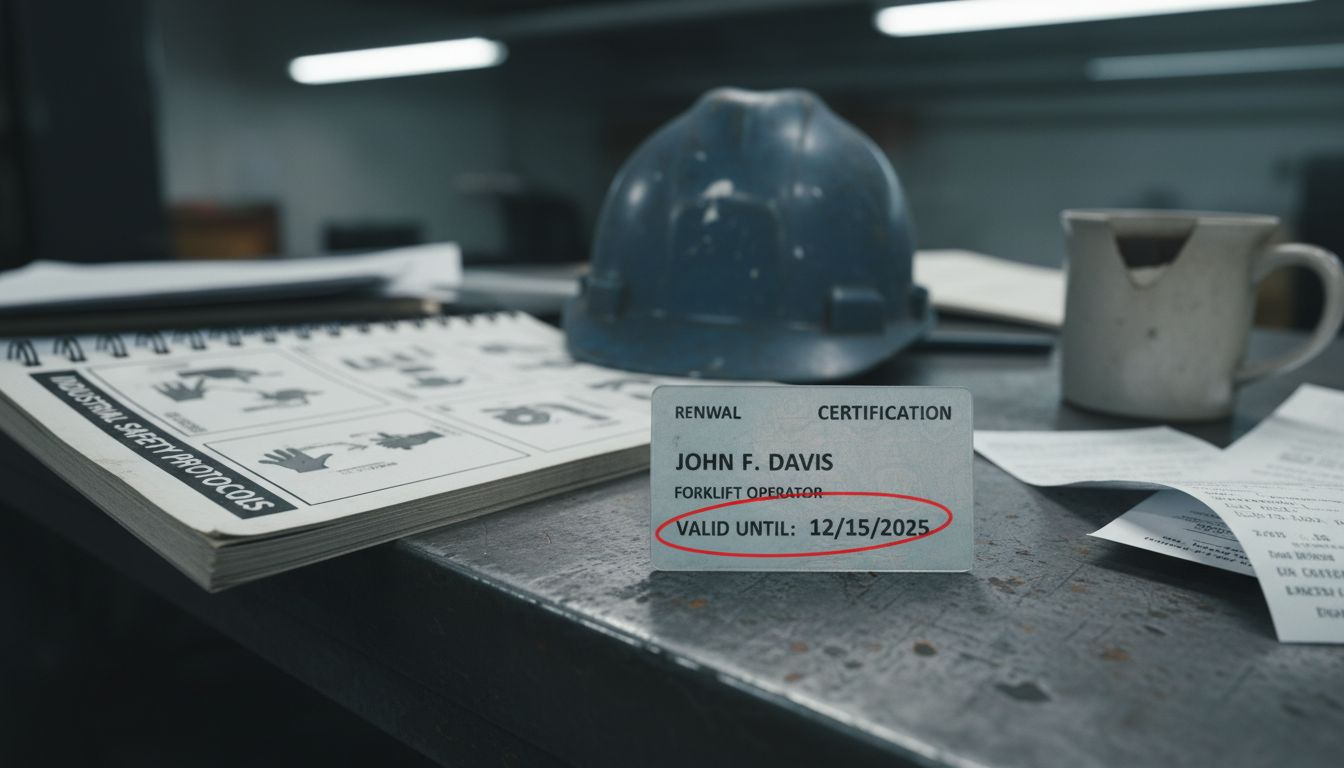
Forklift certification cards serve as official documentation of an operator’s training and competence, featuring multiple essential elements that validate their professional credentials. These cards typically include critical information such as the operator’s full name, specific equipment authorization, training completion date, certification expiration date, and the issuing training provider’s details. Beyond mere identification, these cards function as critical compliance documents that employers can quickly reference during workplace safety audits, demonstrating their commitment to maintaining high safety standards and regulatory compliance.
The training curriculum itself is meticulously designed to cover comprehensive operational skills and safety protocols. Operators learn about forklift vehicle characteristics, equipment controls, workplace-specific hazards, load management techniques, stability principles, and critical safety practices. The training goes far beyond basic operational skills, emphasizing risk assessment, accident prevention, and the nuanced understanding of how to navigate complex industrial environments safely. Each training program is tailored to address the unique challenges of different workplace settings, whether in warehouses, construction sites, shipping yards, or manufacturing facilities.
Pro tip: Photograph and digitally backup your forklift certification card to ensure you always have a duplicate record in case the original is lost or damaged.
Employer and Operator Responsibilities
In the world of industrial equipment operation, forklift safety is a shared responsibility that requires active participation from both employers and operators. Workplace safety standards mandate clear expectations for each party, creating a collaborative framework designed to minimize risks and prevent potential accidents.
Employers bear significant legal and operational responsibilities in maintaining forklift safety. Their primary obligations include developing comprehensive training programs, ensuring all operators receive proper certification, conducting regular performance evaluations, and maintaining detailed training records. This involves selecting qualified instructors, providing appropriate training materials, scheduling initial and recurring training sessions, and documenting each operator’s competency. Employers must also create workplace environments that support safe forklift operation, which includes maintaining equipment, identifying potential hazards, and establishing clear safety protocols that align with OSHA regulatory requirements.
Forklift operators, conversely, are responsible for applying their training consistently and professionally. Their key responsibilities include following all safety protocols, conducting pre-operation equipment inspections, reporting mechanical issues immediately, wearing appropriate personal protective equipment, and operating forklifts only within their certified skill level and equipment authorization. Operators must actively participate in training programs, demonstrate competence during evaluations, and maintain a commitment to workplace safety that goes beyond mere compliance. They are expected to recognize potential hazards, communicate effectively with coworkers, and make split-second decisions that prioritize safety in dynamic industrial environments.
The following table summarizes key responsibilities for employers and operators regarding forklift safety:
| Stakeholder | Primary Responsibility | Impact on Safety |
|---|---|---|
| Employer | Implement training, track compliance | Reduces legal risk and accidents |
| Operator | Follow protocols, report hazards | Prevents incidents and equipment damage |
Pro tip: Develop a personal safety checklist that you review before each shift, ensuring you consistently meet both your personal and professional safety responsibilities.
Validity, Renewal, and Compliance Risks
Forklift training certifications are not permanent credentials, but time-sensitive documents requiring proactive management and periodic renewal. OSHA mandates specific guidelines that establish clear parameters for maintaining operator certification, typically requiring comprehensive re-evaluation every three years or after significant workplace incidents.
The renewal process involves more than simply updating documentation. Employers must conduct thorough performance assessments that evaluate an operator’s practical skills, theoretical knowledge, and adherence to safety protocols. These evaluations can be triggered by multiple factors, including workplace accidents, near-miss incidents, observation of unsafe practices, introduction of new equipment, or changes in workplace environments. Failing to maintain current certification can result in substantial legal and financial risks, including potential OSHA penalties, increased insurance costs, and potential liability for workplace accidents.
Compliance risks extend beyond mere paperwork and can have profound operational and legal consequences. Operators with expired or invalid certification cards are effectively unauthorized to operate industrial equipment, which can lead to immediate work stoppage, potential termination, and significant organizational disruption. Moreover, employers who knowingly allow uncertified operators to handle forklifts face severe penalties, including substantial fines, potential criminal charges in cases of serious accidents, and potential civil litigation from injured workers or third parties.
Pro tip: Implement a digital tracking system that sends automated renewal reminders at least 60 days before certification expiration, ensuring continuous compliance and minimizing administrative oversights.
Secure Your Forklift Training Card and Ensure OSHA Compliance Today
Navigating the complexities of forklift operator certification can feel overwhelming. This article highlights the critical importance of maintaining a current forklift training card that meets OSHA standards to protect both employers and operators from safety risks and costly penalties. If you are seeking official authorization, comprehensive training, and ongoing compliance support, turning to trusted resources is essential.
At Forklift Certification Archives, you will find OSHA-compliant training programs tailored to various equipment types and workplace needs. Whether you need initial certification, renewal options, or practical hands-on training, our trusted platform at Forkliftacademy.com offers flexible online and onsite instruction backed by over 20 years of industry experience. Access expert guidance, keep your certification current, and demonstrate your commitment to workplace safety with ease.
Don’t risk the consequences of expired or incomplete certification. Take proactive steps now by exploring tailored forklift training solutions at Forklift License Archives. Start your journey toward safety compliance and professional skill validation by visiting Forkliftacademy.com. Secure your certification card and operate with confidence today.
Frequently Asked Questions
What is the purpose of a forklift training card?
A forklift training card serves as official documentation proving an operator’s legal authorization and competence to operate forklifts safely, demonstrating that they have completed thorough safety training in accordance with OSHA standards.
What are the types of forklift certification cards available?
Forklift certification cards vary by equipment type and skill level, including standard classifications such as warehouse forklift cards, rough terrain forklift cards, narrow aisle forklift cards, and specialized equipment cards, each indicating specific training relevant to the equipment used.
How often do forklift operators need to renew their certification?
Forklift operators must typically be re-evaluated and renew their certification every three years or immediately after an accident or unsafe behavior is observed, as mandated by OSHA regulations.
What are the consequences of operating a forklift without a valid training card?
Operating a forklift without a valid training card can lead to significant legal and financial risks, including potential OSHA penalties, increased insurance costs, workplace accidents, and possible liability for employers if unauthorized personnel cause incidents.
Recommended
- What is an OSHA Card? Understanding its Importance and Use – Top Osha Forklift Certification
- Forklift Trainer Responsibilities: Complete Guide – Top Osha Forklift Certification
- Forklift Safety Standards Explained: OSHA Rules and Compliance – Top Osha Forklift Certification
- Complete Guide to OSHA Compliance for Forklift Safety – Top Osha Forklift Certification