
Over 20,000 forklift-related injuries are reported in American workplaces each year, making proper training vital for every warehouse manager. When safety and compliance are on the line, finding effective onsite forklift courses becomes a core responsibility. This guide breaks down what an onsite forklift course involves, helping you choose OSHA-approved programs that protect your team and your business from costly risks.
Table of Contents
- What Is An Onsite Forklift Course
- Types Of Onsite Forklift Training Programs
- How Onsite Courses Fulfill OSHA Standards
- Key Requirements For Warehouse Certification
- Risks, Costs, And Common Mistakes
Key Takeaways
| Point | Details |
|---|---|
| Onsite Forklift Training Ensures Safety Compliance | Training programs are designed to meet OSHA standards, focusing on safety protocols, hazard recognition, and operator competence. |
| Diverse Program Types are Available | Training options range from beginner courses to specialized equipment training, catering to various skill levels and workplace needs. |
| Ongoing Education is Essential | Continuous training and recertification are necessary to maintain compliance and ensure operators stay updated on safety practices. |
| Investing in Safety Training Reduces Risks | Comprehensive training prevents accidents and minimizes financial impacts associated with forklift operations, making it cost-effective in the long run. |
What Is an Onsite Forklift Course
An onsite forklift course is a comprehensive safety training program designed specifically for warehouse and industrial settings to certify forklift operators in safe and compliant equipment operation. These courses blend theoretical classroom instruction with hands-on practical training, ensuring workers gain the essential skills needed to operate powered industrial trucks safely and effectively according to OSHA’s Powered Industrial Trucks standard.
Typically, these courses cover critical areas such as equipment inspection, operational techniques, workplace safety protocols, and legal compliance requirements. Participants learn how to navigate complex warehouse environments, understand load management principles, recognize potential hazards, and demonstrate proper forklift handling techniques. The training is structured to provide a complete learning experience that goes beyond basic operational skills, focusing on creating safety-conscious professionals who understand the nuanced responsibilities of forklift operation.
The curriculum for an onsite forklift course usually includes multiple components: formal classroom instruction, written assessments, and practical evaluation periods. Participants receive comprehensive training on equipment types, workplace regulations, safety procedures, and maintenance practices. Most importantly, successful completion results in a certification valid for three years, proving the operator’s competence and commitment to workplace safety standards.
Pro tip: Request a detailed course syllabus before enrollment to understand exactly what skills and certifications will be covered, ensuring the training meets your specific workplace requirements.
Types of Onsite Forklift Training Programs
Onsite forklift training programs are diverse, designed to accommodate different skill levels and workplace requirements. Comprehensive training courses typically fall into several distinct categories that address the unique needs of various industrial and warehouse environments. These programs range from foundational courses for new operators to advanced training for experienced professionals seeking skill refinement or recertification.
The main types of onsite forklift training programs include:
- Beginner Training Programs: Focused on introducing new operators to basic forklift operation, safety protocols, and fundamental workplace procedures
- Intermediate Skill Enhancement Courses: Designed for operators with some experience who need to improve advanced maneuvering techniques
- Specialized Equipment Training: Tailored programs for specific forklift types such as narrow aisle, rough terrain, or electric models
- Recertification and Refresher Courses: Mandatory three-year renewal training to maintain OSHA compliance and update safety knowledge
Each training program is meticulously structured to provide both theoretical knowledge and practical hands-on experience. Participants undergo rigorous classroom instruction combined with supervised equipment operation, ensuring they develop comprehensive skills that meet stringent safety standards. The goal is not just certification, but creating competent, safety-conscious forklift operators who can navigate complex workplace environments with confidence and precision.
Here’s a summary of key differences between major onsite forklift training program types:
| Program Type | Target Audience | Focus Areas | Typical Outcomes |
|---|---|---|---|
| Beginner Training | New operators | Basic operation, safety basics | Foundational skills, entry-level |
| Intermediate Enhancement | Some experience | Advanced maneuvering, complex tasks | Enhanced skills, improved safety |
| Specialized Equipment | Experienced operators | Specific forklift models, scenarios | Capability with specialized gear |
| Recertification/Refresher | All certified operators | Updates on rules, skills refresh | Maintained compliance, renew cert. |
Pro tip: Request a personalized training needs assessment before enrolling to ensure the selected program matches your specific workplace equipment and operational requirements.
How Onsite Courses Fulfill OSHA Standards
Onsite forklift training programs are meticulously designed to meet the rigorous safety standards established by the Occupational Safety and Health Administration (OSHA). These comprehensive programs ensure that organizations maintain the highest levels of workplace safety through structured compliance training, addressing every critical aspect of forklift operation and worker protection.
The core components of OSHA compliance in onsite forklift courses include:
- Formal Classroom Instruction: Comprehensive theoretical training covering OSHA regulations, safety protocols, and equipment-specific guidelines
- Practical Skills Evaluation: Hands-on assessments that verify operators can safely maneuver forklifts in real-world workplace conditions
- Equipment Inspection Training: Detailed instruction on pre-operation inspections, identifying potential mechanical risks and maintenance requirements
- Hazard Recognition and Mitigation: Comprehensive modules teaching operators to identify, assess, and prevent potential workplace safety risks
These programs go beyond basic certification by creating a holistic approach to workplace safety. They systematically address OSHA’s specific requirements for powered industrial truck operators, including detailed training on load management, operational techniques, workplace environment awareness, and emergency response protocols. Each training session is carefully structured to ensure operators not only understand the technical aspects of forklift operation but also develop a comprehensive safety mindset that protects themselves and their colleagues.
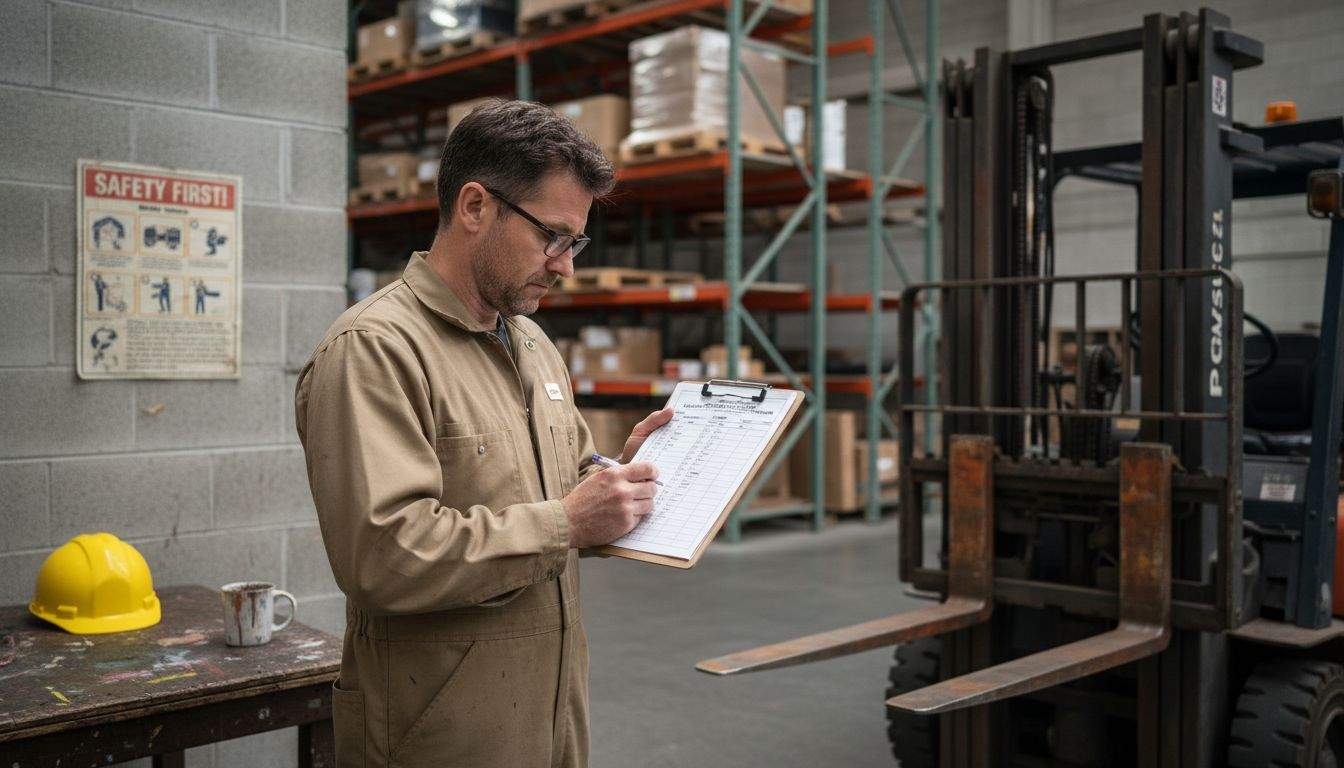
Pro tip: Request a detailed compliance documentation package from your training provider to ensure the course fully meets all current OSHA regulatory requirements.
Key Requirements for Warehouse Certification
Warehouse forklift certification demands a comprehensive approach to ensuring operator competency and workplace safety. Rigorous training and evaluation procedures are essential for meeting OSHA’s stringent standards and protecting workers in industrial environments. These requirements go far beyond simple operational training, encompassing a holistic approach to workplace safety and equipment management.
The core key requirements for warehouse certification include:
- Comprehensive Operator Training: Detailed instruction covering equipment-specific operational techniques, safety protocols, and workplace hazard recognition
- Practical Skills Assessment: Hands-on evaluation demonstrating operators’ ability to safely maneuver forklifts in complex warehouse environments
- Equipment Inspection Protocols: Systematic procedures for pre-operation inspections, maintenance documentation, and mechanical risk assessment
- Ongoing Safety Documentation: Maintaining detailed training records, incident reports, and certification tracking for each qualified operator
Successful warehouse certification requires a multi-layered approach that addresses both individual operator capabilities and broader organizational safety standards. This involves not just initial training, but continuous education, regular performance evaluations, and adaptive safety strategies that respond to changing workplace conditions. Warehouses must demonstrate a commitment to creating a culture of safety that goes beyond mere compliance, focusing on proactive risk management and employee protection.
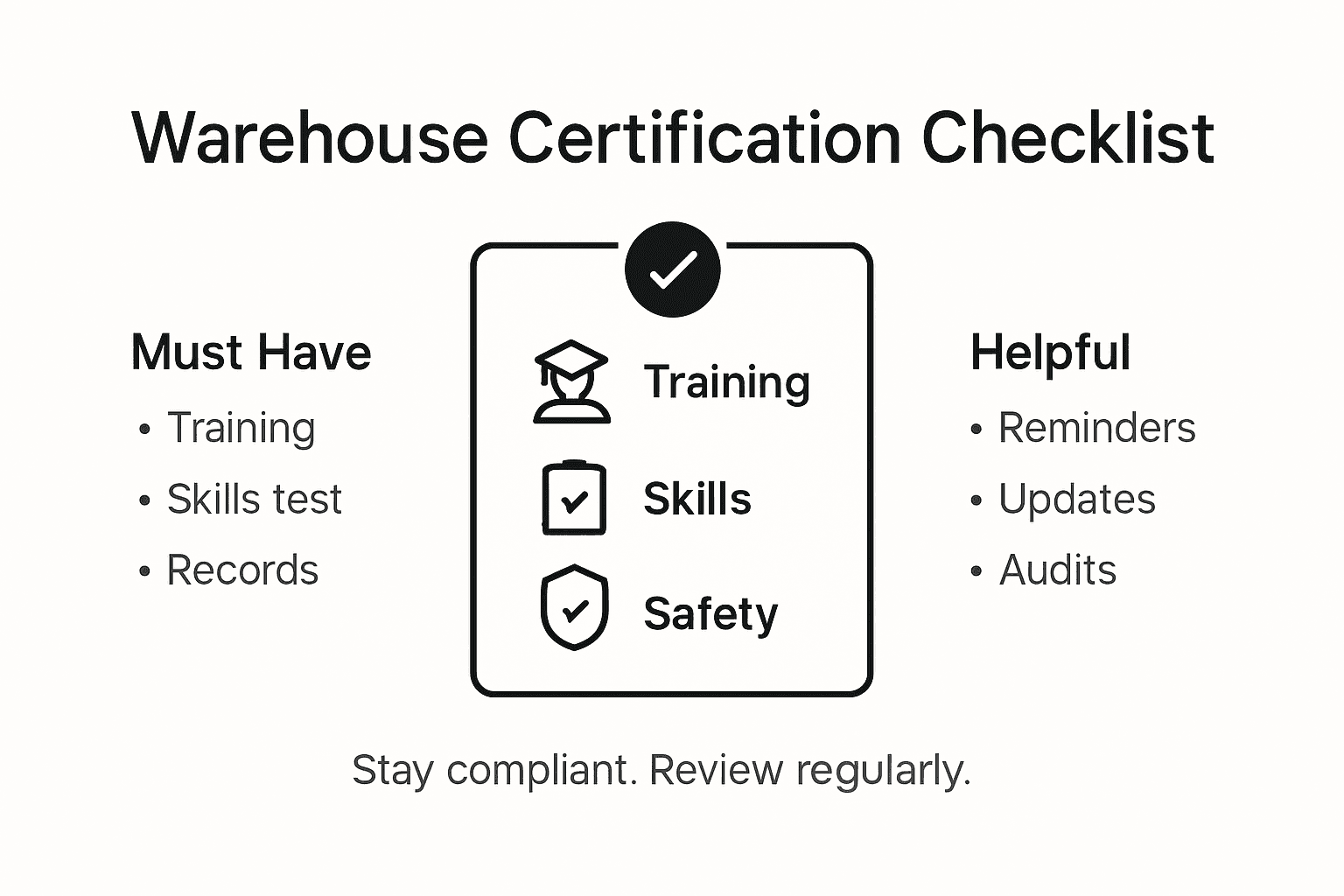
Pro tip: Develop a comprehensive internal tracking system that monitors certification expiration dates, training updates, and individual operator performance to maintain consistent warehouse safety standards.
Risks, Costs, and Common Mistakes
Forklift operations involve significant workplace hazards that can result in substantial financial and human costs. Complex operational risks demand a comprehensive understanding of potential safety challenges and economic implications for warehouse managers and business owners.
The most critical risks and common mistakes in forklift operations include:
- Equipment Overloading: Exceeding recommended load capacities, leading to potential tip-overs and catastrophic accidents
- Inadequate Operator Training: Insufficient skill development resulting in improper handling and increased accident probability
- Poor Maintenance Practices: Neglecting routine equipment inspections and mechanical evaluations
- Unsafe Driving Behaviors: Speeding, improper turning, and failing to observe workplace traffic protocols
Each of these risks carries significant financial consequences beyond immediate physical danger. A single forklift accident can generate extensive costs, including medical expenses, potential worker compensation claims, equipment damage, operational disruptions, and potential legal liabilities. Insurance premium increases and potential OSHA violation penalties can further compound these economic impacts. Warehouses must recognize that investing in comprehensive safety training and rigorous operational standards is far more cost-effective than managing the aftermath of preventable workplace incidents.
The table below illustrates the financial impact of common forklift operation errors and the value of thorough training:
| Risk Area | Potential Financial Cost | Prevention Through Training |
|---|---|---|
| Equipment Overloading | Machine damage, injury claims | Teaches load limits, safe handling |
| Inadequate Training | Accident settlements, fines | Ensures operator competence |
| Poor Maintenance | Costly repairs, downtime | Promotes regular inspection skills |
| Unsafe Behaviors | Liability, OSHA penalties | Reinforces safe driving standards |
Pro tip: Conduct monthly safety audits and implement a robust reporting system to track near-misses and potential hazards before they escalate into serious incidents.
Ensure Your Team’s Safety and OSHA Compliance with Expert Onsite Forklift Training
Workplace safety and regulatory compliance are the top priorities when it comes to forklift operation. This article highlights the challenges many companies face in meeting OSHA standards, including proper operator certification, hazard recognition, and equipment inspection protocols. If you want to avoid costly accidents and maintain a strong safety culture, investing in a comprehensive onsite forklift course is essential. Forkliftacademy.com offers tailored training programs that tackle these exact pain points by combining OSHA-compliant classroom instruction with hands-on practical evaluations.
Ready to empower your workforce and secure OSHA certification with trusted training solutions? Explore our Forklift License Archives – Top Osha Forklift Certification for individual and business courses designed to fit your specific needs. Learn how to enhance operational safety and efficiency through proven instructional methods at Forklift Safety Archives – Top Osha Forklift Certification. Start your journey toward safer forklift operation today by visiting Forkliftacademy.com. Take action now to prevent accidents and ensure compliance before it’s too late.
Frequently Asked Questions
What is an onsite forklift course?
An onsite forklift course is a safety training program that certifies forklift operators within warehouse and industrial settings, blending theoretical instruction with practical training to ensure safe equipment operation.
How does an onsite forklift course meet OSHA standards?
These courses are designed to comply with OSHA’s regulations by incorporating formal training, practical skills assessments, equipment inspection training, and hazard recognition, ensuring operators are knowledgeable about safety protocols.
What are the different types of onsite forklift training programs?
Types of onsite forklift training include beginner programs for new operators, intermediate skill enhancement for those with some experience, specialized training for specific forklift types, and recertification courses to maintain compliance every three years.
What are the risks associated with inadequate forklift training?
Inadequate training can lead to serious risks such as equipment overloading, improper handling, increased accident probability, and significant financial repercussions due to medical expenses, equipment damage, and potential legal liabilities.
Recommended
- What Is Site-Specific Forklift Training? Complete Overview – Top Osha Forklift Certification
- Complete Guide to OSHA Compliance for Forklift Safety – Top Osha Forklift Certification
- Forklift Safety Standards Explained: OSHA Rules and Compliance – Top Osha Forklift Certification
- Forklift Certification for Businesses: Ensuring OSHA Compliance – Top Osha Forklift Certification