
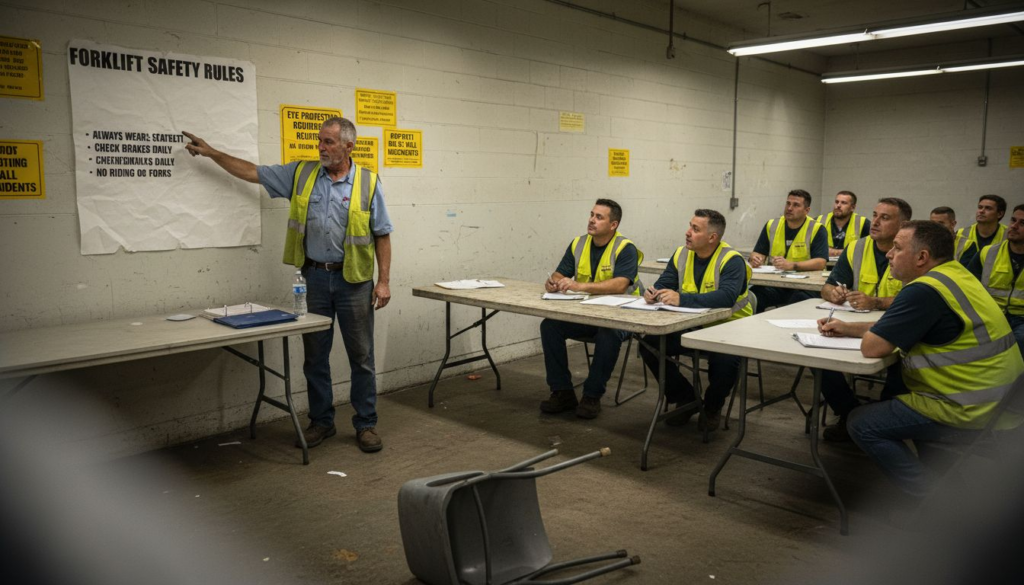

Over 60 percent of American workplace injuries involving industrial equipment could be prevented with thorough training. Forklift accidents remain a top concern for many businesses, making robust education a priority for safety and compliance. By demystifying what a forklift training kit includes and exposes common myths, this guide will help you understand the real value behind structured operator preparation.
| Point | Details |
|---|---|
| Comprehensive Training Kits | Forklift training kits go beyond manuals, combining theory and practical skills for safety and compliance. |
| OSHA Compliance | Adhering to OSHA standards requires structured training, formal evaluations, and proper documentation. |
| Benefits of Training | Effective training reduces accidents, ensures legal compliance, and boosts employee confidence. |
| Customizable Solutions | Choose training kits tailored to specific workplace needs to maximize learning effectiveness. |
A forklift training kit represents a comprehensive educational package designed to prepare operators for safe and legal industrial equipment operation. These kits go beyond simple instruction manuals, providing a structured approach to understanding complex machinery, workplace safety protocols, and OSHA regulatory requirements. Modern training kits combine theoretical knowledge with practical skill development, ensuring operators are fully prepared for real-world challenges.
Contrary to common misconceptions, forklift training is not a one-size-fits-all process. Comprehensive training programs debunk several prevalent myths about equipment operation. Many operators mistakenly believe that years of experience automatically translate to proper training, but OSHA standards require structured, documented learning that covers specific safety protocols, equipment handling techniques, and workplace risk assessment.
A typical forklift training kit includes several critical components:
The ultimate goal of these kits is not just compliance, but creating a culture of safety and operational excellence. Businesses investing in thorough training reduce workplace accidents, minimize equipment damage, and demonstrate a commitment to employee development.
Pro Tip: Verify Training Comprehensiveness: Always confirm that your forklift training kit covers both theoretical knowledge and hands-on practical skills, ensuring a holistic approach to operator preparation.
Forklift training kits come in diverse formats, each designed to meet specific organizational and individual learning needs. These comprehensive packages range from basic entry-level programs to advanced train-the-trainer certification modules. Specialized training kits typically address different operational contexts, ensuring that operators receive targeted instruction aligned with their workplace requirements.
The primary categories of forklift training kits include:
Each training kit has unique components that address specific learning objectives. Individual kits often include digital manuals, online assessment tools, and certification documentation. Corporate packages typically offer more extensive resources, including group training materials, multiple user licenses, and comprehensive safety protocol documentation. Advanced train-the-trainer programs provide in-depth instructional techniques and advanced safety management strategies.
The complexity and depth of training kits vary significantly based on organizational needs, equipment types, and industry-specific safety requirements. Businesses must carefully evaluate their specific operational context to select the most appropriate training solution.
Here is a comparison of the main types of forklift training kits and their ideal use cases:
| Training Kit Type | Ideal For | Typical Delivery Method |
|---|---|---|
| Individual Operator Kits | Single workers or small firms | Self-study manuals, online exams |
| Corporate Training Packages | Large teams or enterprises | Group sessions, onsite workshops |
| Online Self-Paced Modules | Remote learners, flexible schedules | Web-based platforms, digital quizzes |
| Train-the-Trainer Programs | Safety managers, trainers | In-depth courses, instructional guides |
Pro Tip: Customization Matters: Always select a forklift training kit that closely matches your specific workplace equipment, industry regulations, and operational environments to ensure maximum learning effectiveness and compliance.
A comprehensive forklift training kit represents more than just educational materials – it’s a carefully designed system that ensures workplace safety and operational competence. Training program fundamentals typically encompass multiple critical components that transform novice operators into skilled professionals.
The core elements of an effective forklift training kit generally include:
Each component serves a specific purpose in operator development. Instructional manuals provide theoretical knowledge about equipment mechanics, safety procedures, and operational best practices. Safety protocol documentation outlines workplace hazard identification, prevention strategies, and emergency response techniques. Practical assessment materials enable trainers to objectively evaluate an operator’s skill level, ensuring they can safely manipulate equipment in real-world scenarios.
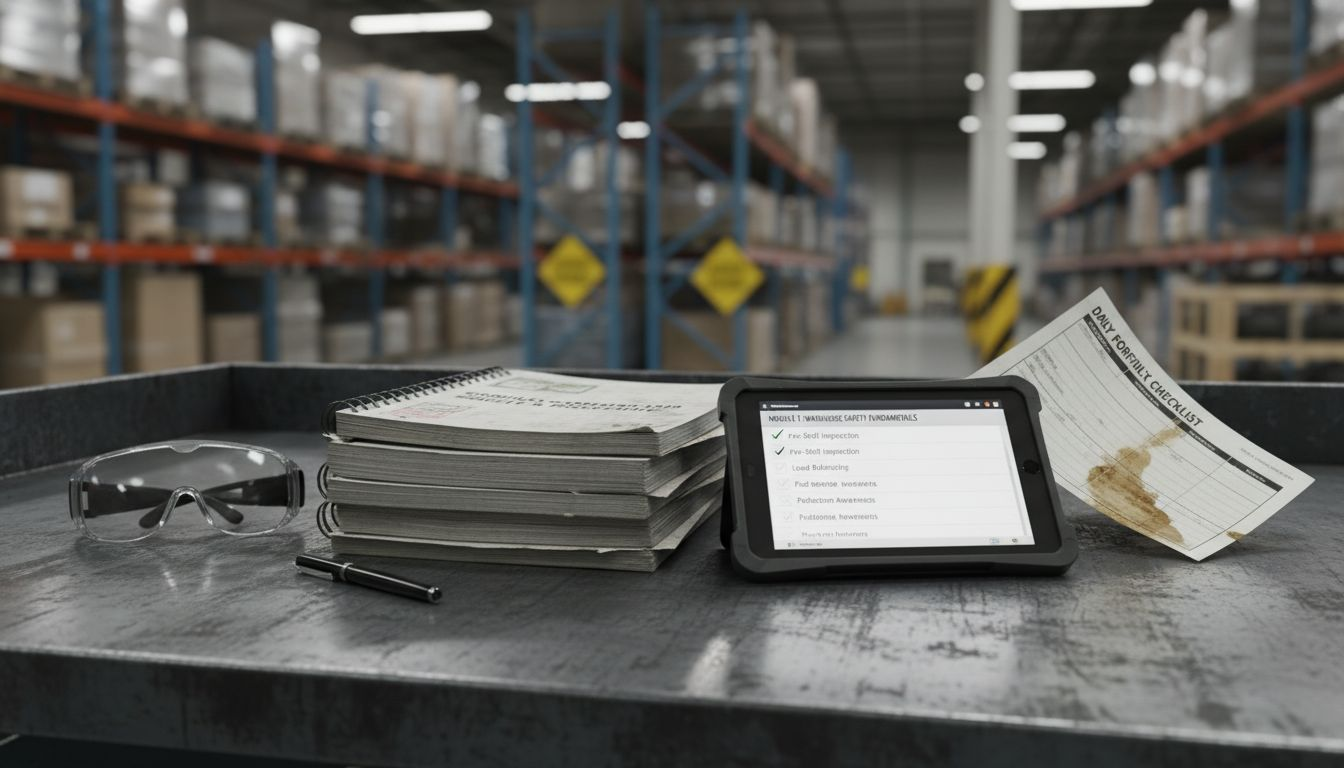
Digital learning modules offer flexible, interactive training experiences that complement traditional instruction methods. These multimedia resources include video demonstrations, interactive simulations, and knowledge assessment quizzes that help reinforce critical learning objectives. Certification documentation serves as official proof of completed training, demonstrating an operator’s competence and an organization’s commitment to safety standards.
This summary outlines the business impact of core training kit elements:
| Kit Component | Operator Benefit | Business Benefit |
|---|---|---|
| Instructional Manuals | Clarity in machine operation | Consistent safety standards |
| Practical Assessments | Real-world confidence building | Lower accident rates |
| Digital Learning Modules | Flexible learning opportunities | Simplified progress tracking |
| Certification Documents | Proof of skills and compliance | Regulatory protection, audit-ready |
Pro Tip: Comprehensive Review: Always thoroughly examine each training kit component, ensuring it addresses specific workplace equipment, operational environments, and industry-specific safety requirements.
The Occupational Safety and Health Administration (OSHA) establishes rigorous legal standards that govern forklift operator training and workplace safety. Legal training requirements mandate comprehensive education and certification to ensure operational safety and minimize workplace accidents.
Key OSHA compliance requirements for forklift training include:
Employers bear significant legal responsibility for ensuring proper training and certification. OSHA regulations require employers to develop structured training programs that cover theoretical knowledge and practical skills. This includes comprehensive instruction on equipment-specific operational techniques, workplace hazard recognition, load handling procedures, and safety protocol implementation. Failure to comply can result in substantial financial penalties, potential legal liability, and increased risk of workplace accidents.
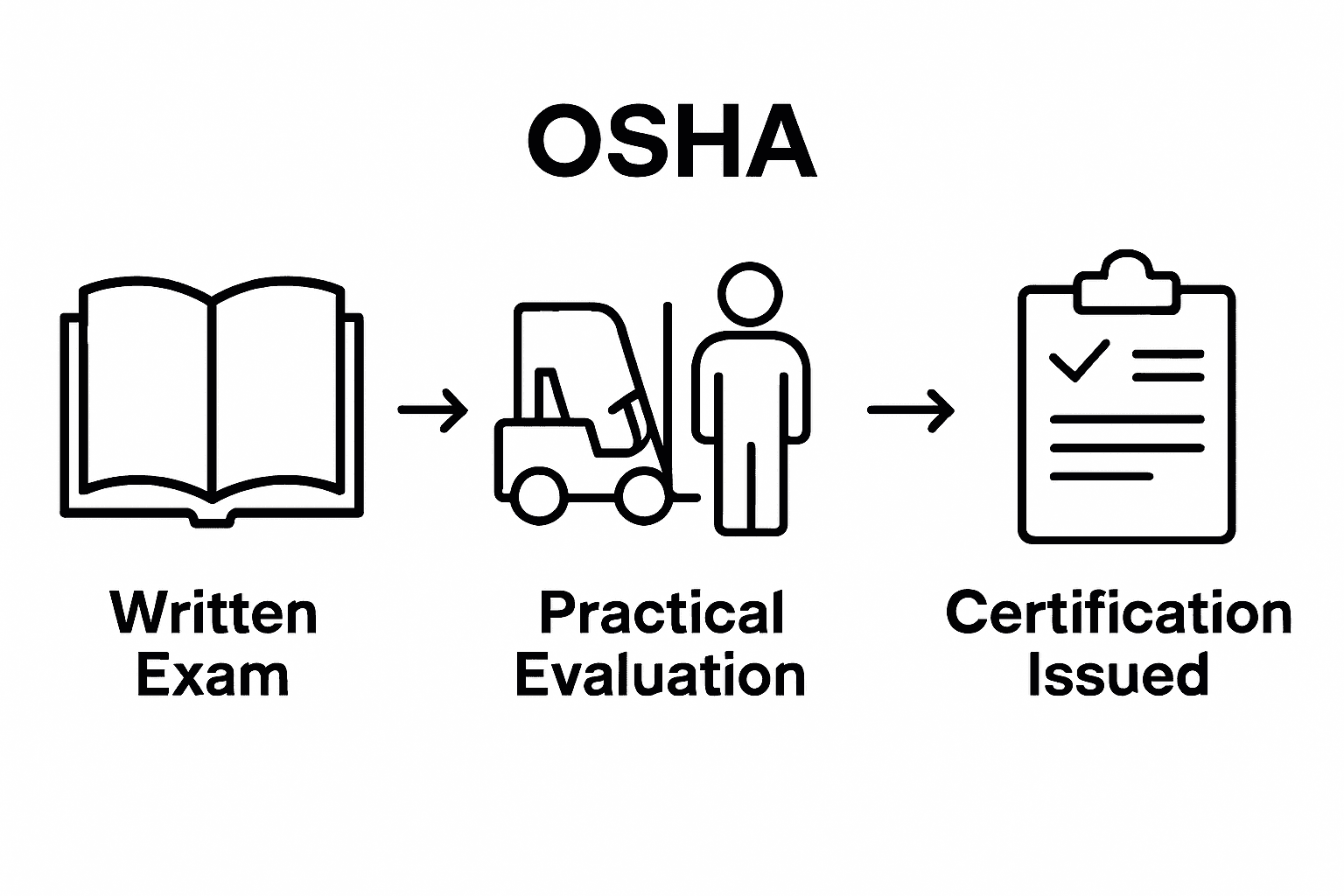
The certification process involves multiple critical components: written examinations testing theoretical knowledge, practical skill demonstrations, and ongoing performance evaluations. Operators must prove proficiency in equipment operation, safety procedures, and risk management techniques. Training documentation must be maintained and readily available for potential OSHA inspections, serving as tangible evidence of an organization’s commitment to workplace safety.
Pro Tip: Documentation Discipline: Maintain meticulous training records, including individual operator certifications, performance assessments, and renewal dates, to demonstrate consistent OSHA compliance and protect your organization from potential legal challenges.
Forklift training kits offer substantial advantages for organizations, but they also come with potential risks that require careful navigation. Training program insights reveal the complex landscape of operator education and workplace safety management.
Key benefits of comprehensive forklift training include:
However, organizations frequently encounter several critical pitfalls during implementation. Common mistakes include superficial training approaches, inadequate practical skill assessment, and failure to customize training to specific workplace environments. Businesses might mistakenly assume that online modules alone constitute sufficient preparation, overlooking the crucial hands-on component of operator training. This approach can create significant safety vulnerabilities and potential legal exposure.
Risk management demands a holistic approach to forklift operator training. Organizations must balance theoretical knowledge with practical skill development, ensuring that training programs address both technical competence and safety consciousness. This involves creating dynamic, interactive learning experiences that simulate real-world challenges, integrating advanced assessment techniques, and maintaining ongoing performance monitoring.
Pro Tip: Continuous Improvement: Regularly audit and update your forklift training program, incorporating feedback from operators, analyzing incident reports, and adapting to evolving workplace safety standards to maintain a robust and effective training strategy.
If you are navigating the complexities of forklift training kits to meet OSHA requirements you understand the importance of comprehensive, documented education that combines theoretical and practical skills. The challenge often lies in finding a solution that covers safety protocols, hands-on assessments, and compliance documentation all tailored to your specific workplace environment. Forkliftacademy.com specializes in addressing these pain points by offering OSHA-compliant forklift training and certification programs designed to empower operators and reduce workplace risks.
Take control of your forklift training today with our extensive range of individual and corporate training packages. Whether you need flexible online modules or onsite hands-on instruction, our solutions are built to ensure safety, legal compliance, and operational excellence. Explore our Forklift Certification Archives – Top Osha Forklift Certification for detailed programs and learn how to stay ahead of OSHA’s legal mandates. Visit Forkliftacademy.com now to get started and secure your certification with confidence. Your workforce’s safety and your company’s compliance depend on acting now.
A forklift training kit is a comprehensive educational package designed to prepare operators for safe industrial equipment operation, including safety protocols, OSHA requirements, and practical skill development.
A typical forklift training kit includes instructional manuals, safety procedure guides, examination materials, practical assessment checklists, and digital training modules.
OSHA mandates formal training, a combination of classroom instruction and practical handling, initial performance evaluations, recertification every three years, and documentation of training completion for all forklift operators.
Benefits include reduced accident rates, enhanced operational efficiency, legal compliance, improved equipment handling skills, lower insurance premiums, and increased employee confidence.