
Over 80 percent of american workplaces rely on forklifts to handle daily operations, yet updated safety standards are changing what it means to be a certified operator. As regulations evolve, the gap between basic training and true workplace safety grows more apparent. This guide brings clarity to what modern forklift certification really involves, especially for those aiming to meet new industry and OSHA requirements in 2025.
Table of Contents
- Defining Forklift Training In 2025 Standards
- Types Of Forklifts And Required Certifications
- OSHA Guidelines And Legal Updates For 2025
- Certification Process And Training Options
- Employer Responsibilities And Compliance Risks
- Common Mistakes And How To Avoid Them
Key Takeaways
| Point | Details |
|---|---|
| Comprehensive Training | Forklift operator training in 2025 must include formal instruction, hands-on practice, and performance evaluations to enhance both skills and safety awareness. |
| Technology Integration | Progressive training programs utilize technology, such as virtual reality simulations, to create interactive and tailored learning experiences for operators. |
| Employer Responsibilities | Employers are required to maintain rigorous training programs and track certifications to mitigate compliance risks and enhance workplace safety. |
| Common Pitfalls | Operators should avoid errors such as overloading equipment and neglecting pre-operation inspections, as these can lead to serious accidents and injuries. |
Defining Forklift Training in 2025 Standards
Forklift operator training in 2025 represents a comprehensive approach to workplace safety that goes far beyond basic operational skills. Forklift operator requirements now mandate a multilayered training strategy designed to enhance both technical competence and safety awareness. The evolving standards reflect a significant shift from traditional training models toward more dynamic, interactive learning experiences.
Under the current OSHA guidelines, forklift training must encompass three critical components: formal instruction, practical hands-on training, and thorough performance evaluation. The forklift certification requirements for 2025 specifically emphasize comprehensive skill assessment across multiple dimensions. Operators must demonstrate not just mechanical ability, but a nuanced understanding of workplace safety protocols, equipment maintenance, and risk management strategies.
Key training elements in 2025 include detailed modules on:
- Advanced equipment operation techniques
- Workplace hazard identification
- Ergonomic considerations
- Digital safety tracking and reporting
- Equipment maintenance and pre-operation inspection protocols
The most progressive training programs now integrate technology-enhanced learning methods, including virtual reality simulations and adaptive online modules. These approaches allow for personalized learning experiences that can be tailored to specific workplace environments and individual operator skill levels. Importantly, forklift trainer certification has also become more rigorous, ensuring that training professionals themselves meet elevated professional standards.
Types of Forklifts and Required Certifications
Forklift operations encompass a diverse range of specialized equipment, each requiring unique skills and certifications. Types of forklift certifications are crucial for ensuring workplace safety and operational efficiency. OSHA classifies forklift trucks into distinct categories that demand specific training and expertise, reflecting the complexity of industrial material handling equipment.
The standard forklift classification system recognizes seven primary equipment types, each with unique operational characteristics and certification requirements. Counterbalance forklifts, which are the most common, require operators to understand weight distribution, load management, and precise maneuvering techniques. Electric motor rider trucks, internal combustion engine trucks, and narrow aisle vehicles represent just a few of the specialized classifications that demand targeted training approaches.
Key forklift types and their certification nuances include:
- Counterbalance Forklifts: Standard warehouse workhorses
- Reach Trucks: Specialized for high-shelf storage environments
- Pallet Jacks: Low-height material movement equipment
- Order Picking Forklifts: Designed for vertical inventory management
- Rough Terrain Forklifts: Engineered for outdoor and uneven surfaces
Effective certification programs now integrate comprehensive training methods that go beyond basic operational skills. Modern training approaches incorporate hands-on practical experience, digital simulation technologies, and rigorous performance evaluations to ensure operators can safely navigate complex workplace environments across different forklift types and configurations.
OSHA Guidelines and Legal Updates for 2025
OSHA continues to evolve its regulatory framework for forklift operations, introducing more comprehensive safety standards that significantly impact workplace training and certification protocols. OSHA compliance guidelines for 2025 emphasize a holistic approach to operator safety, focusing on both technical skill development and comprehensive risk management strategies.
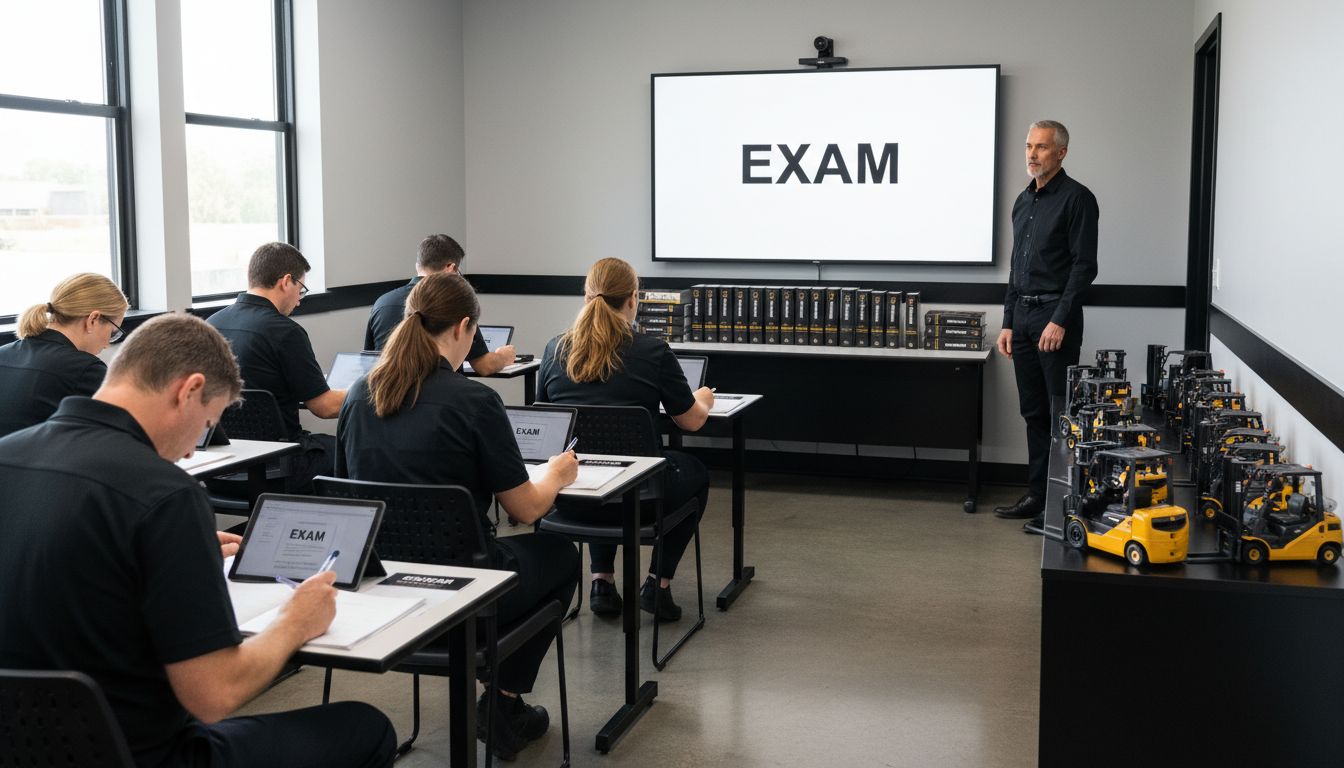
Under the current Standard 29 CFR 1910.178(l), forklift training requirements mandate a multi-stage certification process that goes beyond traditional operational instruction. Operators must now demonstrate proficiency through formal classroom learning, hands-on practical training, and rigorous performance evaluations specific to their unique workplace environments. These updated guidelines reflect a growing recognition that effective forklift safety extends far beyond basic mechanical operation.
Key regulatory updates for 2025 include:
- Mandatory periodic skills reassessment
- Enhanced digital tracking of operator certifications
- More stringent performance evaluation criteria
- Expanded training requirements for specialized equipment
- Increased emphasis on workplace-specific safety protocols
Training programs must now implement comprehensive OSHA requirements that address the nuanced challenges of modern industrial environments. This approach recognizes that effective safety training is a dynamic process, requiring continuous learning, adaptation, and a proactive approach to risk management in increasingly complex workplace settings.
Certification Process and Training Options
Forklift certification represents a critical pathway for operators to demonstrate professional competence and workplace safety readiness. Complete forklift certification processes in 2025 now encompass comprehensive training modules that go beyond traditional operational instructions, integrating advanced safety protocols and technological awareness.
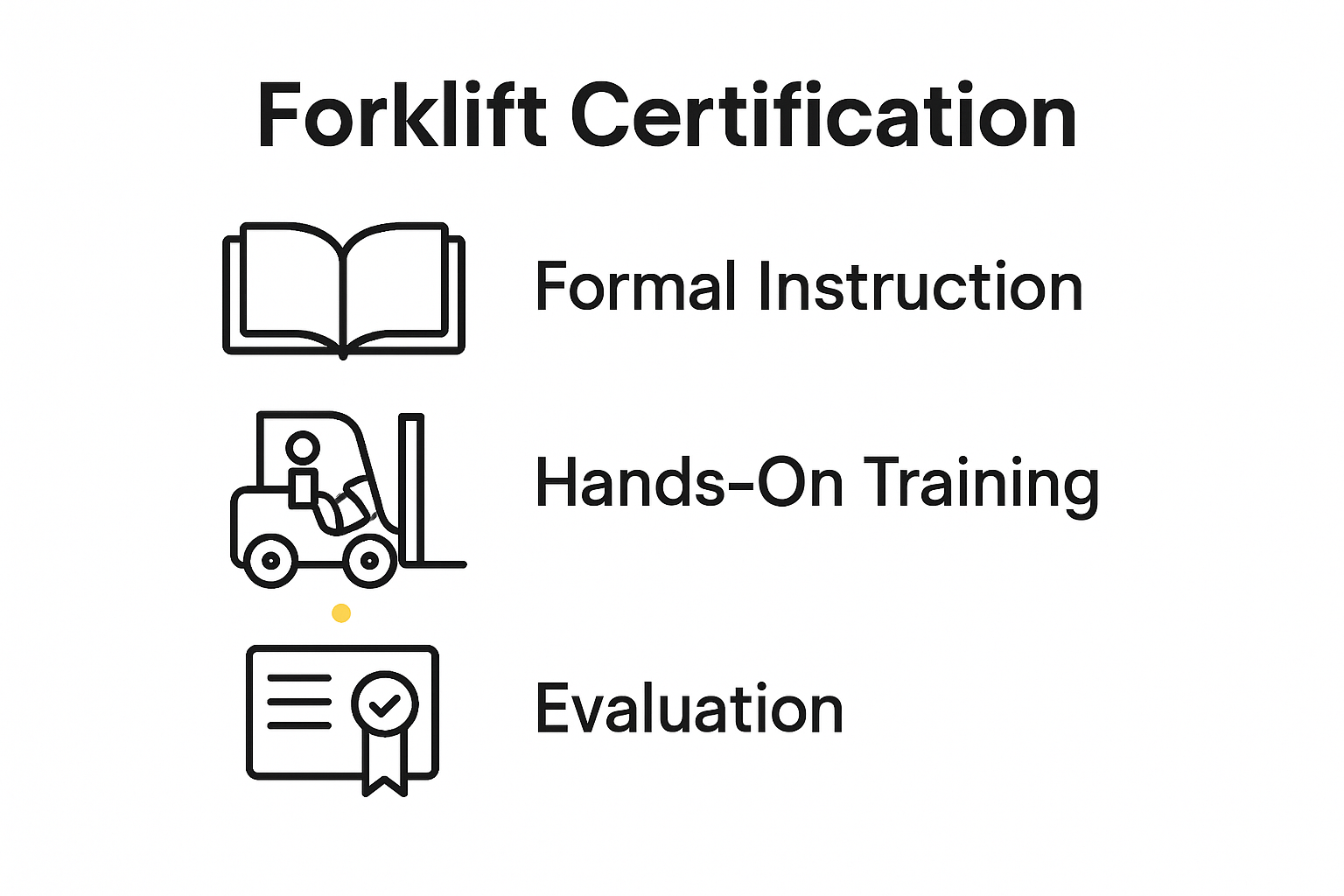
The standard certification journey involves a multi-stage approach that thoroughly validates an operator’s skills and knowledge. Certification requirements mandate completing formal classroom instruction, hands-on practical training, and a rigorous performance evaluation. Most certification programs follow a structured three-year validity period, after which operators must undergo recertification to ensure their skills remain current and aligned with the latest safety standards.
Key certification training options include:
- Classroom-based comprehensive training programs
- Online interactive learning modules
- Hybrid training combining digital and in-person instruction
- Specialized equipment-specific certification tracks
- Advanced safety and risk management courses
Operators seeking certification must navigate the OSHA forklift certification process with precision, demonstrating not just technical proficiency but a deep commitment to workplace safety. The evolving certification landscape reflects an industry-wide recognition that effective forklift operation is as much about risk management and situational awareness as it is about mechanical skill.
Employer Responsibilities and Compliance Risks
Employers bear significant legal and financial responsibilities when managing forklift operations within their workplace. OSHA compliance guidelines establish clear mandates for companies to proactively manage training, certification, and ongoing safety protocols for all forklift operators.
Compliance requirements extend far beyond simple documentation, demanding comprehensive risk management strategies. Employers must implement rigorous training programs, maintain detailed certification records, and ensure periodic skill reassessments. Failure to meet these standards can result in substantial financial penalties, potential legal liability, and increased workplace accident risks that could compromise both employee safety and organizational reputation.
Key employer responsibilities include:
- Conducting initial operator skill assessments
- Providing comprehensive training programs
- Maintaining accurate certification documentation
- Implementing regular performance evaluations
- Ensuring ongoing safety training and skill updates
- Tracking individual operator certification expiration dates
- Conducting workplace-specific equipment training
Navigating the complex landscape of forklift safety requirements demands a proactive and systematic approach. Successful organizations recognize that compliance is not merely a regulatory checkbox, but a critical investment in workplace safety, operational efficiency, and long-term risk mitigation.
Common Mistakes and How to Avoid Them
Forklift operators face numerous potential pitfalls that can compromise workplace safety and operational efficiency. Forklift training programs increasingly focus on identifying and mitigating the most common operational mistakes that lead to accidents, injuries, and costly equipment damage.
Operational errors can emerge from multiple sources, ranging from inadequate training to complacency and overconfidence. The most critical mistakes include exceeding load capacity, improper equipment inspection, neglecting pre-operation safety checks, and failing to maintain proper situational awareness. Each of these errors can potentially create catastrophic workplace incidents that endanger operators and surrounding personnel.
Key mistakes to avoid include:
- Overloading equipment beyond rated capacity
- Skipping comprehensive pre-operation equipment inspections
- Operating forklifts without proper certification
- Ignoring workplace-specific safety protocols
- Failing to maintain consistent speed and control
- Disregarding load stability and weight distribution
- Neglecting ongoing skills training and recertification
Successful operators recognize that avoiding common forklift safety mistakes requires continuous learning, situational awareness, and a commitment to professional development. By understanding potential risks and maintaining a proactive approach to safety, operators can significantly reduce workplace accidents and create a more secure working environment.
Master Your Forklift Training Requirements with Expert Guidance
Navigating the complex 2025 forklift training landscape can feel overwhelming. From understanding advanced OSHA requirements to meeting strict certification processes and avoiding costly compliance risks operators and employers face real challenges in maintaining safety and efficiency. If your goal is to conquer these hurdles and ensure your team is fully prepared with current skills and knowledge you need trusted resources and proven solutions tailored to these exact standards.
Discover how Forkliftacademy.com helps you meet every facet of the new regulations with comprehensive OSHA-compliant training programs. Whether you want to certify new operators, provide ongoing skill assessments, or equip trainers with advanced resources our targeted solutions cover everything from Forklift Certification Archives – Top Osha Forklift Certification to essential Forklift Safety Archives – Top Osha Forklift Certification topics. Don’t wait to enhance your safety culture and reduce liability risks. Take the next step toward mastering your forklift training requirements today by visiting https://forkliftacademy.com and enrolling in a program designed for 2025 and beyond.
Frequently Asked Questions
What are the key components of forklift training requirements in 2025?
The key components of forklift training requirements in 2025 include formal instruction, practical hands-on training, and thorough performance evaluation. These ensure operators possess both operational skills and a strong awareness of workplace safety protocols.
What types of forklifts require specific certifications?
Different types of forklifts require specific certifications due to their unique operational characteristics. Major classes include counterbalance forklifts, reach trucks, pallet jacks, order picking forklifts, and rough terrain forklifts, each requiring targeted training approaches.
What are the OSHA guidelines for forklift training in 2025?
OSHA guidelines for forklift training in 2025 emphasize a multi-stage certification process, including formal classroom instruction, hands-on practical training, and thorough performance evaluations tailored to specific workplace conditions and equipment types.
How often do forklift operators need to recertify?
Forklift certification typically has a validity period of three years. After this period, operators must undergo recertification to ensure their skills stay current and aligned with the latest safety standards.
Recommended
- Complete Guide to OSHA Compliance for Forklift Safety – Top Osha Forklift Certification
- Forklift Operator Requirements 2025: Complete Guide – Top Osha Forklift Certification
- Forklift Operator Requirements: Complete Guide for 2025 – Top Osha Forklift Certification
- Why Train Forklift Operators: Complete Guide for 2025 – Top Osha Forklift Certification